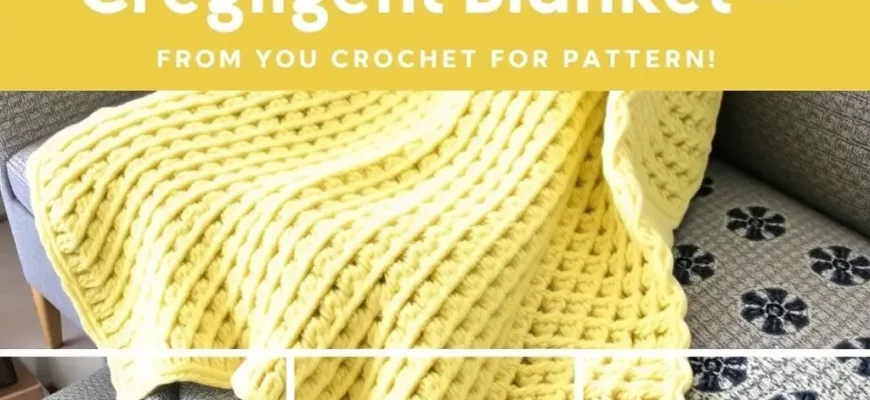
- Finding the Perfect Crochet Weighted Blanket Pattern for Your Needs
- Why Weight Matters: Therapeutic vs. Aesthetic Comfort
- The Pony Bead Method: How to Crochet a Weighted Blanket with Beads
- Securing Your Weights: Best Stitches for Bead Integration
- Comparing Weight Methods: Beads vs. Bulky Yarns
- Choosing Your Bulk: Mastering Blanket Patterns by Yarn Weight
- Lightweight Comfort: Using 3-Weight and 4-Weight Yarns
- Heavy Duty Throws: 5-Weight and 6-Weight Chunky Patterns
- High-Density Stitches for Maximum Blanket Weight
- The Marshmallow and Moss Stitches: Texture Meets Weight
- Specialty Considerations: Baby Blankets and Warmer Climates
- Weighted Blankets for Summer: Breathable Fiber Choices
- Essential Tools and Materials for Your Weighted Project
- Expert Perspective: Weighted Crochet Safety
- Frequently Asked Questions
Finding the Perfect Crochet Weighted Blanket Pattern for Your Needs
Weighted blankets have moved from specialized clinical tools to mainstream household essentials. In the world of fiber arts, creating a crochet weighted blanket pattern allows you to customize the exact pressure and texture required for sensory relief. Whether you are crafting for a child with sensory processing needs or an adult seeking better sleep hygiene, the method you choose—beads versus yarn density—will dictate the project’s success.
The beauty of crochet lies in its versatility. Unlike store-bought blankets that often use plastic pellets in sewn pockets, a crocheted version can integrate weight directly into the fabric structure. This approach eliminates the annoying “shifting” sound of pellets and provides a more breathable, aesthetic result that looks like a high-end home decor piece rather than a medical device.
Why Weight Matters: Therapeutic vs. Aesthetic Comfort
The primary driver behind the weighted blanket trend is Deep Pressure Stimulation (DPS). This tactile input signals the nervous system to shift from a “fight or flight” state to a “rest and digest” state, increasing serotonin and melatonin levels. For a blanket to be functionally therapeutic, it generally needs to weigh approximately 10% of the user’s body weight plus one or two additional pounds.
However, there is a distinct difference between a heavy winter quilt and a functionally weighted throw. An aesthetic heavy blanket might use thick yarn to provide warmth, but a therapeutic blanket focuses on consistent pressure distribution across the entire surface area. If the weight is uneven, the blanket can cause joint strain rather than relaxation. When selecting your pattern, consider whether you need the blanket for its calming effect or simply for the cozy, substantial feel of a thick yarn during the colder months.
The Pony Bead Method: How to Crochet a Weighted Blanket with Beads
Using pony beads is the most effective way to add significant weight to a blanket without making it ten inches thick. Pony beads are small, plastic, and widely available in craft stores. They are ideal for crochet because their large center holes allow most medium-weight yarns to pass through easily. This method turns your blanket into a grid of tiny weights, ensuring the pressure remains perfectly distributed regardless of how the blanket is folded.
To execute this properly, you must pre-string your beads onto your yarn before you begin your row. This requires careful planning. For example, if you are making a blanket that requires 4,000 beads, you will need to string several hundred at a time onto your skein. As you crochet, you slide a bead up to the hook and lock it into place with a specific stitch. This ensures the beads are trapped on the “right side” of the fabric and cannot migrate through the stitches over time.
- Calculate your target weight: Standard plastic pony beads weigh approximately 0.25 grams each. To add 1 pound of weight (453 grams), you need roughly 1,812 beads.
- Pre-string the beads: Use a collapsible eye needle to thread the beads onto your yarn. Do not cut the yarn; work directly from the skein to maintain structural integrity.
- Establish the grid: Plan to drop a bead every 3rd or 4th stitch and every 2nd or 3rd row. This creates an even distribution that won’t “clump” when the blanket is in use.
- The “Lock” Stitch: When you reach a bead, slide it flush against the previous stitch. Work your next stitch (usually a single crochet or puff) tightly around the bead to encase it.
- Test for security: Periodically pull on the fabric to ensure the holes in your crochet work are smaller than the diameter of the bead.
Securing Your Weights: Best Stitches for Bead Integration
The choice of stitch is the most critical safety factor when using beads. If your tension is too loose, beads can slip through the gaps, creating a potential choking hazard or simply an annoying mess. I recommend using a dense single crochet or a modified puff stitch. The puff stitch is particularly effective because it creates a “pocket” of yarn that naturally hugs the bead, providing a soft buffer between the plastic and the user’s skin.
When calculating for a 3.5 lbs or 5 lbs result, remember to account for the weight of the yarn itself. A standard twin-sized crochet blanket made with worsted weight yarn usually weighs around 2 to 3 pounds on its own. If you want a 5 lb total weight, you only need to add 2 to 3 pounds of beads. Always weigh a sample swatch with beads included to get an accurate estimate of the final project weight before committing to the full blanket.
Comparing Weight Methods: Beads vs. Bulky Yarns
Deciding between external weights (beads) and internal weight (yarn mass) depends on your lifestyle and the intended user. Each method has distinct trade-offs regarding maintenance and construction speed.
| Feature | Pony Bead Method | Bulky Yarn (Weight 5-6) |
|---|---|---|
| Total Weight Potential | High (Easily hits 10+ lbs) | Moderate (Usually 4-7 lbs) |
| Breathability | Excellent (Uses thinner yarn) | Low (Traps significant heat) |
| Washability | Machine wash cold; air dry only | Machine wash and dry (depending on fiber) |
| Construction Time | Slow (Requires pre-stringing) | Very Fast (Large hooks/yarn) |
| Texture | Nobby and tactile | Soft, squishy, and smooth |
Choosing Your Bulk: Mastering Blanket Patterns by Yarn Weight
If the idea of stringing thousands of beads sounds exhausting, you can achieve a weighted feel by selecting the right yarn weight and stitch density. The “weight” of yarn refers to the thickness of the strand, categorized from 0 (lace) to 7 (jumbo). For a substantial blanket, you should focus on categories 3 through 6. The secret to a “yarn-only” weighted blanket is maximizing the amount of fiber used per square inch.
Using a thinner yarn with a dense stitch creates a heavy, drape-heavy fabric that feels like a “second skin.” Conversely, using a jumbo yarn creates a thick, pillowy barrier. Both offer comfort, but the sensory experience is different. Thinner yarns (3 and 4) tend to be more “floppy” and conforming, while thicker yarns (5 and 6) are more rigid and structured.
Lightweight Comfort: Using 3-Weight and 4-Weight Yarns
Standard 3-weight (DK) and 4-weight (Worsted) yarns are the workhorses of the crochet world. To make a blanket feel “weighted” using these thinner strands, you must avoid open-work patterns like granny squares or lace. Instead, focus on “solid” fabrics. The Moss Stitch (also known as the Linen Stitch) is a personal favorite for this. It uses a sequence of single crochets and chains that creates a woven-like texture with almost zero gaps.
For a baby blanket using 3-weight yarn, you can achieve a “calming” weight by doubling the yarn (holding two strands together) while using a smaller-than-recommended hook. This forces the stitches closer together. A 4-weight yarn blanket made entirely in waistcoat stitch (center single crochet) will be incredibly heavy and stiff, providing a firm pressure that many people find grounding without the bulk of chunky roving yarns.
Heavy Duty Throws: 5-Weight and 6-Weight Chunky Patterns
When you move into 5-weight (Bulky) and 6-weight (Super Bulky) yarns, the weight comes naturally from the mass of the fiber. These projects are incredibly satisfying because they grow quickly. A 6-weight yarn like Lion Brand Wool-Ease Thick & Quick can produce a full-sized throw in a weekend. However, the challenge here is the “heat factor.” Chunky synthetic yarns trap a lot of body heat, which can be overwhelming for some users.
To mitigate heat while maintaining weight, look for “tube” yarns or cotton-blend chunky yarns. These have more structural integrity and less “fuzz,” allowing for better airflow between the large stitches. A simple half-double crochet (HDC) worked in the back loops only (BLO) with a 10mm or 12mm hook will create a ribbed, heavy throw that has enough “give” to be comfortable while still providing that sought-after heavy pressure.
High-Density Stitches for Maximum Blanket Weight
If you want a heavy blanket, you need a “yarn eater” stitch. These are patterns that use significantly more yardage than a standard double crochet. By folding the yarn over itself multiple times within a single row, you create a 3D texture that adds physical weight and insulation. These stitches are perfect for users who want the weighted experience without using plastic fillers.
Pro Tip: When working a yarn-eater stitch, always buy 20-30% more yarn than the pattern suggests. The density of these stitches can easily exhaust your supply faster than anticipated.
The Marshmallow and Moss Stitches: Texture Meets Weight
The Marshmallow Stitch is a variation of the puff stitch that creates a grid of “bubbles.” Because each bubble is essentially a cluster of 5 or more loops, the amount of yarn used is massive. This results in a blanket that is incredibly thick and heavy but remains surprisingly flexible. It is the gold standard for sensory blankets because the “bubbles” provide additional tactile input for the user’s fingers.
The Moss stitch, while thinner, provides weight through its tight, interlaced structure. If you use a sport-weight or DK-weight yarn with a Moss stitch, the resulting fabric is thin enough to be used year-round but heavy enough to feel substantial. For a truly weighted effect, try the Waffle Stitch. It creates a deep, recessed grid that traps air for warmth and uses nearly double the yarn of a flat stitch, making it one of the heaviest “natural” crochet options available.
Specialty Considerations: Baby Blankets and Warmer Climates
Safety and climate are the two biggest hurdles in weighted blanket construction. While an adult might enjoy a 15-pound wool throw, that same item could be dangerous for a child or unbearable in a humid environment. Customizing your fiber choice is just as important as the pattern itself.
- Fiber Choice: Use 100% cotton or bamboo for “cool” weight. These fibers are heavier by volume than acrylic but do not trap heat.
- Safety Check: For any weighted item intended for a child, the beads must be encased so securely that they cannot be removed even with vigorous picking.
- Breathability: In warmer climates, use a “Weight 3” cotton yarn with a dense stitch like the Herringbone Half Double Crochet. This provides weight through the fiber’s natural density rather than through thickness.
Weighted Blankets for Summer: Breathable Fiber Choices
Many people need the sensory input of a weighted blanket to sleep but find themselves overheating in the summer. To solve this, avoid animal fibers (wool, alpaca) and high-loft acrylics. Instead, look for mercerized cotton. Mercerization makes the cotton denser and smoother. A blanket made with mercerized cotton 3-weight yarn using a tight Moss stitch will feel cool to the touch but provide a comforting “heaviness” that mimics a light weighted blanket.
Another option for summer is the “open-weave weighted” style. This involves using a very heavy cotton cord (like macramé cord) and a massive hook to create a mesh. The weight comes from the thickness of the cord, but the large holes allow for maximum ventilation. This is a popular choice for adults with ADHD or autism who need the pressure to regulate their nervous system but are prone to night sweats.
Essential Tools and Materials for Your Weighted Project
Working on a weighted project puts more strain on your hands and tools than a standard lace shawl. You need equipment that can handle the tension and the physical weight of the growing blanket. I recommend using ergonomic hooks with a deep throat (like the Clover Amour or Tulip Etimo series) to prevent wrist fatigue.
- Hooks: A 5mm (H) or 5.5mm (I) hook is standard for 4-weight yarn, but consider sizing down 0.5mm to increase stitch density.
- Stitch Markers: Essential for the bead method to ensure your grid remains perfectly aligned.
- Digital Scale: Use this to weigh your beads and your finished swatches to ensure you hit your target weight.
- Yarn: Brands like Lion Brand 24/7 Cotton (for cool weight) or Bernat Blanket (for maximum squish) are industry favorites for these specific patterns.
- Reinforced Scissors: You will be cutting through thicker materials and potentially thousands of yarn tails.
Expert Perspective: Weighted Crochet Safety
In my professional experience as both a long-time crafter and a sensory advocate, the most overlooked aspect of DIY weighted blankets is structural integrity over time. Many beginners focus on the initial weight but forget that yarn stretches. If you use beads, you must perform the “pinch test”: try to force a bead through the fabric gaps with your fingers. If it pops through even slightly, your stitch is too loose. For children, I always advise staying on the lighter side of the 10% rule. Furthermore, never use a weighted blanket for an infant or a child who cannot remove the blanket themselves. Safety is the foundation of therapeutic craft; a blanket is only “calming” if it is fundamentally secure.
Frequently Asked Questions
Standard pony beads weigh about 0.25 grams each. To add one pound of weight, you need approximately 1,800 beads. Multiply this by your target weight (e.g., 5 lbs = 9,000 beads) and distribute them evenly across your total stitch count.
Is a weighted blanket safe for a baby?
No. Weighted blankets are strictly not recommended for infants due to the risk of SIDS and suffocation. For babies, stick to lightweight, breathable 3-weight yarn patterns without any added weights or beads.
What is the best yarn weight for a heavy crochet blanket without beads?
Weight 6 (Super Bulky) or Weight 7 (Jumbo) are the best for natural weight. Alternatively, you can hold two or three strands of Weight 4 (Worsted) yarn together to create a custom “mega-yarn” that adds significant mass.
Can I wash a crochet blanket that has pony beads in it?
Yes, but you must be careful. Use a cold, delicate cycle and place the blanket inside a heavy-duty mesh laundry bag to prevent the beads from banging against the drum. Always air dry, as high heat can warp or melt plastic beads.
Which crochet stitch uses the most yarn to make a blanket heavier?
The Waffle Stitch, Bobble Stitch, and Marshmallow Stitch are the top “yarn eaters.” These stitches create multiple layers of yarn in a single row, effectively doubling the weight of the finished fabric compared to a flat stitch.
What size crochet hook should I use for 3-weight yarn blankets?
For a standard drape, a 4mm (G) hook is common. However, for a denser, weighted feel, I recommend a 3.5mm or 3.75mm hook to ensure the stitches are tight enough to provide structural support.