- Why the Rewilding Debate is Defining 21st-Century Conservation
- The Clash Between Human Management and Wild Autonomy
- Turning Ghost Towns into Habitats: Rewilding Abandoned Landscapes in Europe
- The Ecological Opportunity of Rural Flight
- Navigating the Pros and Cons of Restoring Wild Autonomy
- Reimagining the British Countryside: A Rewilding Britain Landscape
- From Sheep Walks to Scrubland: The Transformation of UK Uplands
- The Mega-Fauna Factor: European Bison and the Asiatic Lion Controversy
- The Return of the King: European Bison Rewilding Success
- Asiatic Lion Rewilding to Europe: Scientific Vision or Ecological Risk?
- Regional Spotlights: Landscape Rewilding in Finland and Western Iberia
- Boreal Restoration: Landscape Rewilding in Finland
- The Iberia Corridor: Rewilding Western Iberia
- Connecting the Dots: The Power of the European Rewilding Network
- Scaling Up: How Shared Data Improves Conservation Outcomes
- Essential Steps for Community-Led Rewilding Success
- Expert Perspective: Navigating the Rewilding Debate
- Frequently Asked Questions
Why the Rewilding Debate is Defining 21st-Century Conservation
The conversation surrounding European nature is shifting from a focus on static preservation to a dynamic embrace of wildness. This movement, known as the rewilding debate, challenges the long-held belief that humans must act as the primary gardeners of the natural world. Instead of simply protecting what remains, we are now discussing how to step back and allow natural forces to take the lead once again.
This discourse is not merely academic; it represents a fundamental change in how we view our relationship with the land. While traditional conservation often seeks to freeze a landscape in a specific historical state, rewilding looks forward to an unpredictable and self-governed future. This tension between control and autonomy sits at the heart of modern environmental policy.
The Clash Between Human Management and Wild Autonomy
For centuries, European landscapes have been defined by intensive human management, where every forest, river, and meadow was shaped by agriculture or industry. The shift toward wild autonomy requires a psychological leap, moving from active management—where we decide which species live where—to a passive approach that trusts natural processes to find their own balance.
True ecological health often depends on self-sustaining ecosystems that do not require constant human subsidies or intervention to function. When we remove fences and stop artificial drainage, we allow the land to breathe, creating a mosaic of habitats that are far more resilient than any human-designed park. The goal is to reach a point where nature can manage itself without a permanent human workforce, reducing long-term costs and increasing biological complexity.
Turning Ghost Towns into Habitats: Rewilding Abandoned Landscapes in Europe
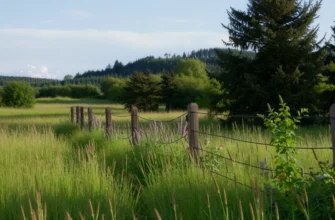
Rural flight is currently redrawing the map of the European continent, leaving behind millions of hectares of former farmland. As populations migrate to urban centers, the resulting land abandonment creates a unique, albeit accidental, opportunity for large-scale ecological restoration. These “ghost landscapes” are no longer productive in the traditional sense, but they are becoming the front lines of a wilder Europe.
While the loss of rural culture and heritage is a profound social challenge, the ecological windfall is undeniable. In areas where the plow has stopped, the forest is beginning to return, and with it, species that haven’t been seen in generations. We are witnessing a transition from managed decline to a spontaneous resurgence of wild life across the Mediterranean and Eastern Europe.
The Ecological Opportunity of Rural Flight
The process of rewilding abandoned landscapes in Europe often begins with natural regeneration, where hardy pioneer species reclaim old fields and pastures. Without the pressure of livestock or machinery, these areas quickly transition into scrubland and eventually secondary forests. This transition provides critical cover and food sources for a variety of birds, insects, and small mammals.
Perhaps most striking is the return of apex predators to these former agricultural zones. Wolves and lynx are naturally expanding their ranges into abandoned territories, following the surge in wild ungulate populations. This natural recovery demonstrates that nature does not always need a formal reintroduction plan; it simply needs the space and time to reclaim what was lost.
Navigating the Pros and Cons of Restoring Wild Autonomy
The decision to allow a landscape to go wild is never without friction. It involves weighing the undeniable gains in biodiversity against the very real concerns of local communities who have lived on the land for centuries.
| Ecological & Economic Pros | Social & Cultural Cons |
|---|---|
| Increased Biodiversity: Restores complex food webs and allows keystone species to return. | Loss of Cultural Heritage: Traditional farming practices and historical landscapes may disappear. |
| Climate Resilience: Wild forests and peatlands act as massive carbon sinks and natural flood defenses. | Human-Wildlife Conflict: Predation on livestock by wolves or bears can cause significant local pushback. |
| New Economic Streams: Nature-based tourism and carbon credits can replace failing agricultural models. | Land-Use Anxiety: Local residents may feel “pushed out” by environmental policies from distant cities. |
| Cost Efficiency: Self-sustaining ecosystems require far less long-term financial investment than managed land. | Perception of Neglect: Untidy, scrubby landscapes are often viewed as “wasted” or “ruined” by the public. |
Reimagining the British Countryside: A Rewilding Britain Landscape
In the United Kingdom, the rewilding movement faces a unique set of hurdles due to high population density and a deep cultural attachment to “manicured” rural aesthetics. The British countryside is often perceived as a series of neat sheep walks and tidy hedgerows, but this vision is increasingly being challenged. A rewilding Britain landscape is one that trades the monoculture of grass for a messy, productive tangle of thorns, sallows, and wetlands.
The shift is moving away from subsidized high-intensity farming in marginal uplands toward nature-recovery models that prioritize ecosystem services. By allowing the land to transition back to a more complex state, the UK can address its status as one of the most nature-depleted countries on Earth. This isn’t about abandoning the land, but redefining its value beyond just agricultural output.
From Sheep Walks to Scrubland: The Transformation of UK Uplands
The Knepp Estate in West Sussex serves as a primary example of how quickly a landscape can recover when intensive management stops. By introducing free-roaming cattle, ponies, and pigs to act as proxies for extinct megafauna, the estate has seen a massive explosion in rare species like turtle doves and purple emperor butterflies. This model proves that even small-scale projects can have a disproportionately large impact on local biodiversity.
Public perception remains a major hurdle, as many people view “scrub” as a sign of failure rather than a vital habitat. However, the establishment of nature recovery networks is helping to change the narrative. These corridors link isolated pockets of wildness, allowing species to migrate and adapt to a changing climate. To succeed, these projects must prove that a wilder landscape is more profitable and beautiful than a barren hillside.
The Mega-Fauna Factor: European Bison and the Asiatic Lion Controversy
Large animals are the engines of healthy ecosystems, driving the “trophic cascades” that keep nature in balance. The reintroduction of megafauna is perhaps the most visible and debated aspect of the European movement. While some species have made a triumphant return, others remain the subject of intense scientific and social scrutiny, pushing the boundaries of what we consider “native.”
The distinction between reintroducing a species that recently vanished and introducing one that has been gone for millennia is vital. One is a restoration of a broken link; the other is a more radical attempt at taxon substitution. Both approaches aim to restore the functional roles of large herbivores and carnivores that were lost to human expansion.
The Return of the King: European Bison Rewilding Success
The European bison rewilding programs are a masterclass in successful species recovery. Once on the brink of extinction, these massive animals are now being released into the wild from the Carpathians to the Netherlands. As keystone herbivores, bison are “ecosystem engineers” that create structural diversity in forests by toppling trees, creating wallows, and dispersing seeds through their dung.
Their presence creates a ripple effect, benefiting everything from dung beetles to forest birds that rely on the open glades the bison create. Maintaining genetic diversity remains the biggest challenge for these growing populations. To ensure long-term survival, conservationists are working to connect isolated herds, creating a meta-population that can thrive without human genetic management.
Asiatic Lion Rewilding to Europe: Scientific Vision or Ecological Risk?
The idea of Asiatic lion rewilding to Europe is a far more controversial proposal. While lions were once present in the Balkans and parts of Southern Europe during the Holocene, their reintroduction is viewed by many as a step too far. Proponents argue that lions could fulfill the role of an apex predator in areas where deer populations are out of control, but the social risks are immense.
The technical challenges of introducing a large, social cat into the fragmented landscapes of modern Europe cannot be overstated. Unlike the solitary lynx, lions require large territories and pose a direct threat to human safety and livestock. Most experts agree that focusing on existing native predators like wolves and bears is a more pragmatic and socially acceptable path for the foreseeable future.
Regional Spotlights: Landscape Rewilding in Finland and Western Iberia
Rewilding is not a one-size-fits-all strategy; it must be tailored to the specific climate and geography of the region. From the frozen peatlands of the north to the sun-scorched valleys of the south, the methods vary wildly. These regional projects serve as living laboratories, testing how different ecosystems respond to the removal of human pressure.
“The success of rewilding is measured not by the number of trees planted, but by the level of autonomy restored to the land. A truly wild landscape is one that no longer needs our permission to exist.”
Boreal Restoration: Landscape Rewilding in Finland
In the north, landscape rewilding in Finland is primarily focused on the restoration of vast peatland systems. These areas were historically drained for commercial forestry, which turned them from carbon sinks into carbon sources. By blocking drainage ditches and restoring natural water levels, conservationists are triggering wetland recovery that benefits both the climate and local wildlife.
Community-led initiatives are at the heart of Finnish efforts, with local villages taking ownership of restoration projects. This approach ensures that carbon storage goals are balanced with local economic needs, such as reindeer herding and sustainable berry harvesting. These restored mires provide critical habitat for migratory birds and help regulate local water cycles, proving that rewilding can be a vital tool for climate adaptation.
The Iberia Corridor: Rewilding Western Iberia
In the borderlands between Spain and Portugal, rewilding western Iberia is focused on creating a massive wildlife corridor. This region, characterized by its “dehesa” or “montado” landscapes, has suffered from significant rural depopulation. By purchasing large tracts of land and removing internal fencing, organizations are allowing the landscape to reconnect, facilitating the movement of species like the Iberian lynx and the Egyptian vulture.
The use of natural grazing is a cornerstone of this project. Semi-wild horses and Tauros (a breed of cattle designed to mimic the extinct aurochs) are used to manage the scrub and prevent catastrophic wildfires. These grazers create a natural firebreak by keeping the vegetation low, demonstrating a practical, nature-based solution to one of the Mediterranean’s biggest environmental threats.
Connecting the Dots: The Power of the European Rewilding Network
Rewilding is no longer a collection of isolated experiments; it has evolved into a coordinated continental movement. The European Rewilding Network acts as the connective tissue between hundreds of projects, providing a platform for knowledge sharing and financial support. This scaling-up is essential for moving from “pockets of nature” to a truly wild Europe.
By centralizing data and best practices, the network allows land managers in Poland to learn from the successes of those in Portugal. It also plays a crucial role in attracting private investment into the nature-based economy. When rewilding is seen as a viable business model—through eco-tourism, carbon credits, and water purification—it gains the political and social momentum needed for long-term success.
Scaling Up: How Shared Data Improves Conservation Outcomes
The role of a central hub like Rewilding Europe cannot be overstated. They provide the technical expertise needed to handle complex reintroductions and navigate the legalities of land acquisition. Peer-to-peer learning ensures that costly mistakes are not repeated and that every project can build upon the foundations of those that came before.
Ultimately, the goal is to create a “Nature Recovery Network” that spans the entire continent. This requires more than just biological knowledge; it requires political willpower and cross-border cooperation. As we share more data on the economic benefits of wild landscapes, the argument for rewilding becomes impossible for policymakers to ignore.
Essential Steps for Community-Led Rewilding Success
Starting a rewilding project requires more than just a passion for nature; it requires a structured approach that respects both the land and the people living on it.
- Conduct a Baseline Ecological Survey: Before making changes, document every species and habitat type currently present to measure future progress.
- Engage Local Stakeholders Early: Host town halls and workshops to ensure local farmers and residents are partners rather than opponents.
- Secure Legal Permissions: Check local zoning laws and agricultural regulations, as shifting from farming to “wild land” can impact tax status and subsidies.
- Focus on Natural Processes: Instead of planting trees, consider restoring hydrology or introducing natural grazers to let the land shape itself.
- Develop a Nature-Based Business Plan: Identify how the project will sustain itself, whether through low-impact tourism, carbon sequestration, or educational grants.
- Monitor and Adapt: Rewilding is unpredictable; be prepared to change your management strategy if a particular species or process isn’t responding as expected.
Expert Perspective: Navigating the Rewilding Debate
In my professional experience, the single biggest factor that determines the success or failure of a rewilding project is the Social License to Operate. I have seen technically perfect ecological plans fail because the local community felt the project was an “urban imposition” on their traditional way of life. I always advise land managers to prioritize Coexistence over Exclusion. Rewilding should never be about kicking people off the land; it should be about offering them a new, more resilient way to thrive alongside it. If a farmer can see that a wilder landscape provides better flood protection for his home and new income through tourism, he becomes the project’s strongest advocate. Listen more than you lecture, and remember that for nature to be wild, the human community must feel secure.
Frequently Asked Questions
The debate stems from the conflict between traditional, active land management—like farming and forestry—and the “hands-off” approach of rewilding, which often challenges cultural identities and land-use rights.
Are abandoned landscapes in Europe safe for people after rewilding?
Yes, rewilded areas are managed using strategies like wildlife corridors and community education to ensure human-wildlife coexistence and keep the risks associated with returning predators to a minimum.
How does the European Rewilding Network support local projects?
The network provides a central hub for technical expertise, facilitates funding connections, and offers a platform for projects to share best practices and scientific data across borders.
Is rewilding the same as reforestation?
No. While reforestation often involves the active planting of trees, rewilding focuses on restoring natural processes—such as flooding or grazing—so the land can naturally restore its own diverse habitats.
Why is the European bison so important for rewilding?
Bison are ecosystem engineers; their feeding, trampling, and wallowing create a diverse mosaic of habitats that support thousands of other species, from insects to birds.
Can rewilding help with climate change?
Absolutely. Wild landscapes like restored peatlands and old-growth forests are significantly more effective at sequestering carbon and managing floodwaters than monoculture plantations or degraded pastures.