- Can You Safely Wash a Weighted Blanket at Home?
- Identifying Your Blanket’s Fill and Fabric Type
- Machine Washing: Using a Front Loader vs. Top Loader
- Why a Front Loader Is Better for Heavy Blankets
- How to Hand Wash a Weighted Blanket for Longevity
- The Bathtub Deep Clean Method
- The Drying Debate: Can You Tumble Dry a Weighted Blanket?
- Safe Heat Settings and Drying Times
- Spot Cleaning and Steam Cleaning for Quick Refreshes
- Removing Stains Without Submerging the Blanket
- Brand-Specific Care: Layla, Tranquility, and Magic Blankets
- Removing and Washing Covers
- Expert Perspective: Appliance Safety
- Frequently Asked Questions
Can You Safely Wash a Weighted Blanket at Home?
Maintaining a weighted blanket requires a shift in how you view traditional laundry. While standard bedding is designed for high-frequency agitation, the internal architecture of a weighted item—filled with thousands of tiny beads—presents a unique mechanical challenge for residential appliances. Most modern weighted blankets are indeed washable at home, but the “how” depends entirely on the equilibrium between the blanket’s total mass and your washing machine’s drum capacity.
Before you begin, always locate the manufacturer’s care tag, usually tucked into a corner seam. This label provides the thermal limits of the fabric and the specific fill material. If your blanket exceeds 15 to 20 pounds, you are no longer just doing laundry; you are performing a stress test on your home’s plumbing and electrical motors. Ignoring these limits often leads to expensive repairs for both the bedding and the machine.
Identifying Your Blanket’s Fill and Fabric Type
The internal filling is the “engine” of your weighted blanket, and it dictates the cleaning chemistry you should use. Glass beads are the gold standard for high-end blankets because they are non-porous and hypoallergenic; They handle water well but create immense focused weight when wet. Plastic poly pellets, common in mid-range blankets, are more sensitive to temperature. If you wash a polyester weighted blanket with plastic pellets in boiling water, the pellets can soften or clump, permanently ruining the “hug” feel of the product.
Fabric choice also plays a role in temperature selection. Cotton covers thrive in cool to lukewarm water to prevent shrinkage, while minky or fleece-style polyesters require gentle cycles to maintain their soft texture. If you are trying to clean a weighted blanket made of delicate silk or weighted with steel shot, you must be even more conservative with water temperature to prevent fiber breakdown or internal rust—though most modern steel shot is coated to prevent oxidation.
Machine Washing: Using a Front Loader vs. Top Loader
The mechanical action of your washing machine determines whether your blanket emerges refreshed or shredded. Traditional top-loading machines with a central agitator are generally unsuitable for heavy bedding. The agitator’s twisting motion can snag the heavy fabric, causing the internal pockets to tear. Once a single pocket fails, the glass or plastic beads leak into your machine’s drainage system, which can clog your pump and lead to a four-figure repair bill.
| Feature | Front-Loading Washer | Top-Loading (With Agitator) |
|---|---|---|
| Mechanical Action | Tumble/Gravity-based | Centrifugal/Agitation |
| Risk of Tearing | Low (no central post) | High (fabric can wrap/snag) |
| Weight Distribution | Balanced across drum | Often clumps on one side |
| Recommended For | Blankets up to 20 lbs | Light blankets only (under 10 lbs) |
Why a Front Loader Is Better for Heavy Blankets
Front-loading machines utilize a tumbling motion that relies on gravity rather than mechanical force. This is significantly safer when you wash a weighted blanket front loader style because the weight is distributed evenly across the horizontal drum. This prevents the “death wobble” often heard during the spin cycle of a top loader, where the heavy blanket gathers on one side and slams against the outer casing;
When you attempt to wash a 20 lb weighted blanket, you are pushing a standard 120-volt home motor to its absolute limit. A saturated 20 lb blanket can weigh upwards of 35 pounds. If your machine struggles to reach high-speed spins, stop the cycle immediately. Forcing the motor to turn a waterlogged heavy mass can burn out the drive belt or the capacitor. In these cases, taking the blanket to a commercial laundromat with heavy-duty 50 lb capacity machines is the only responsible choice.
How to Hand Wash a Weighted Blanket for Longevity
Hand washing is the safest method for blankets with delicate outer shells or those that exceed your machine’s weight rating. While it is physically demanding, it ensures that no mechanical stress is placed on the seams. This method is particularly effective for blankets with “integrated” covers that cannot be removed, as it allows for a deep soak without the violent tumbling of a machine cycle.
- Sanitize the Tub: Clean your bathtub thoroughly to ensure no soap scum or residue transfers to the blanket fabric.
- Fill with Lukewarm Water: Use cool to lukewarm water. Never use hot water, as it can weaken the adhesive or stitching holding the bead pockets together.
- Dissolve Mild Detergent: Add a small amount of liquid, dye-free detergent. Avoid powder soaps, as they may not dissolve fully and can get trapped in the fill.
- Submerge and Knead: Submerge the blanket and use your hands (or clean feet) to gently press the soapy water through the fabric and beads.
- Rinse Multiple Times: Drain the tub and refill with clean water. Repeat this at least three times until no bubbles remain.
- Press, Don’t Wring: Gently press the water out against the bottom of the tub. Never wring or twist a weighted blanket, as this will snap the internal threads.
The Bathtub Deep Clean Method
When you hand wash a weighted blanket, the goal is to reach the core where body oils and skin cells accumulate. Use a “kneading” technique similar to making bread. This forces the mild soap solution through the dense layers of fill. If you are dealing with a particularly soiled area, you can wipe clean weighted blanket sections with a soft-bristled brush before the full soak.
The most difficult part of hand washing is the extraction of water. A wet blanket is incredibly heavy and difficult to move. Do not attempt to lift the blanket alone while it is fully saturated, as you risk back injury or tearing the blanket’s outer fabric. Use the edge of the tub to support the weight as you slowly press the moisture out over the course of 30 to 60 minutes.
The Drying Debate: Can You Tumble Dry a Weighted Blanket?
Drying is where most weighted blankets meet their end. The high heat of a residential dryer can be catastrophic for synthetic materials and plastic fillings. Even if the fabric is cotton, the internal beads may not handle the concentrated thermal energy of a small dryer drum. Furthermore, the sheer weight of the blanket can cause the dryer drum to fall off its rollers or snap the pulley system.
- Do: Use the “Air Fluff” or “No Heat” setting if your dryer is rated for the weight.
- Do: Add two or three clean tennis balls to the dryer to help keep the fill from clumping.
- Don’t: Use high heat settings, as temperatures above 130°F can melt poly-pellets.
- Don’t: Leave the blanket unattended; check for “hot spots” every 20 minutes.
- Do: Lay the blanket flat across several chairs or a drying rack to air dry if the dryer feels strained.
Safe Heat Settings and Drying Times
If the care label says you can tumble dry weighted blanket items, always default to the lowest possible heat. High heat is the enemy of longevity. For polyester blends, heat can cause “pilling” or a scratchy texture. For plastic-filled blankets, heat can cause the pellets to fuse together, turning your soft blanket into a lumpy, uncomfortable mess.
Air drying is the gold standard for safety, but it takes time. Because the beads trap moisture, a 15 lb blanket may take 24 to 48 hours to dry completely. Always ensure the blanket is 100% dry before placing it back on your bed. Any residual moisture trapped in the glass beads can lead to mold or mildew growth inside the pockets, which is nearly impossible to remove once it starts.
Spot Cleaning and Steam Cleaning for Quick Refreshes
You do not always need a full wash. In fact, washing the entire blanket too often can prematurely wear out the fibers. For small spills like coffee or biological stains, spot cleaning is the preferred method. This preserves the integrity of the internal stitching and saves your appliances from unnecessary wear and tear.
Removing Stains Without Submerging the Blanket
To effectively handle spot cleaning weighted blanket sections, use an enzymatic cleaner for organic stains or a simple mixture of dish soap and water for grease. Apply the solution to a cloth, not the blanket directly, and dab from the outside of the stain inward. This prevents the stain from spreading into the bead pockets.
Steam cleaning is another excellent alternative for sanitization. A handheld steamer can kill surface bacteria and dust mites without saturating the internal fill. However, be cautious with the steam’s temperature if your blanket contains plastic pellets. To keep the blanket fresh between deep cleans, consider using a desiccant pack for weighted blanket storage. These packs absorb ambient moisture and odors, preventing that “musty” smell that often plagues heavy textiles.
Brand-Specific Care: Layla, Tranquility, and Magic Blankets
Different manufacturers use proprietary construction methods that require specific care. For example, some brands use a “quilted” design where each square is individually sewn, while others use a channeled system. Knowing your brand’s specific requirements can prevent you from voiding your warranty.
Removing and Washing Covers
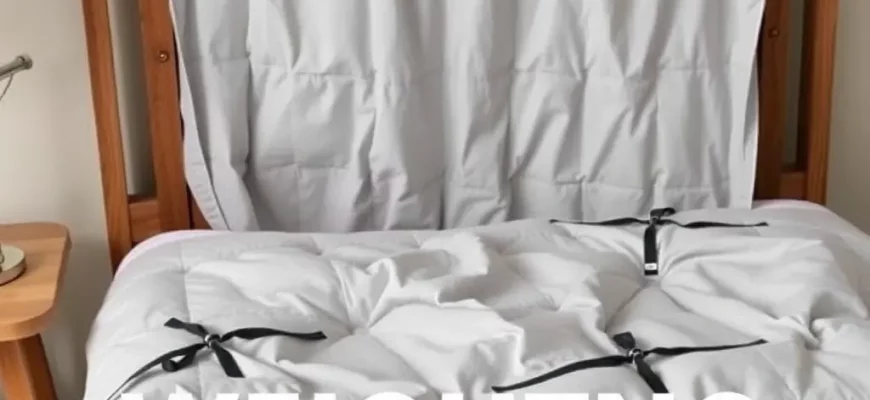
The easiest way to maintain hygiene is to use a removable cover. If you need to remove cover tranquility weighted blanket styles, you will usually find a hidden zipper and internal ties. Washing the cover separately is a breeze—you can treat it like a standard duvet cover. This allows you to wash the part that touches your skin weekly while only washing the weighted inner core once or twice a year.
When it comes to washing Layla weighted blanket products or those from Sedona, pay attention to the “flippable” nature of the fabrics. These blankets often feature one side of cooling cotton and one side of plush mink. Use a gentle, scent-free detergent and avoid fabric softeners. Fabric softeners leave a waxy residue that can clog the weave of the fabric, reducing the breathability of the blanket and making it “sleep hot.”
Expert Perspective: Appliance Safety
In my professional experience, the most common mistake people make is underestimating the weight of water. A 20 lb blanket doesn’t stay 20 lbs when it’s wet; it acts like a 40 lb lead weight. I have seen countless residential washing machines with snapped drive belts and burnt-out motors because the owner tried to force a heavy-duty cycle. If your blanket is 15 lbs or heavier, I always advise using a commercial laundromat. Their machines are built with industrial-grade suspension and high-torque motors that can handle the centrifugal force of a heavy, sodden mass without breaking.
Frequently Asked Questions
Check the care label first. While some fabrics require dry cleaning, the harsh chemicals used by professionals can sometimes degrade the plastic poly-pellets or the internal adhesives in certain brands.
How often should you wash a weighted blanket?
If you use a duvet cover, you only need to wash the weighted inner 2-4 times a year. If you use the blanket without a cover, aim for a monthly wash to remove skin cells and body oils.
Is it dangerous to put a weighted blanket in a tumble dryer?
It can be. High heat can melt plastic fills or damage the motor of a small dryer. Always use the lowest heat setting or air fluff to avoid fire hazards and material damage.
What happens if a weighted blanket leaks in the wash?
Stop the cycle immediately. You must manually scoop out the beads to prevent them from entering the pump. Check the seams of your blanket and repair them with a heavy-duty needle and nylon thread before trying again.
Can I wash a 20 lb blanket in a standard home washer?
Most standard home washers are rated for about 12-15 lbs of dry laundry. A 20 lb blanket is too heavy for most residential machines and should be washed in a large-capacity commercial washer at a laundromat.