- The Core Question: Do Cooling Weighted Blankets Really Work for Sleep?
- How Deep Pressure Relieves Stress and Anxiety
- Separating Science from Hype: Are Weighted Blankets Scientifically Proven?
- Evidence-Based Benefits for Insomnia and Nighttime Restlessness
- The Cooling Conundrum: Do Weighted Cooling Blankets Actually Keep You Cold?
- Why Material Choice Matters for Night Sweats
- Specific Use Cases: From Dementia Care to Heavy Sleepers
- Managing Sundowners and Dementia with Gentle Pressure
- Do Heavy Sleeper Weighted Blankets Actually Work Better?
- Safety Protocols: Why Weighted Blankets Don’t Work for Babies
- Age-Appropriate Use and Physical Limitations
- Optimizing Your Setup: Size, Weight, and Care
- Common Mistakes to Avoid When Buying Weighted Bedding
- Frequently Asked Questions
The Core Question: Do Cooling Weighted Blankets Really Work for Sleep?
The surge in popularity of weighted bedding has led many to wonder if these heavy covers actually deliver on their promises or if they are simply a well-marketed trend. At the heart of this technology is a therapeutic method known as Deep Pressure Stimulation (DPS), which involves applying firm but gentle pressure to the body to switch the nervous system from a state of “fight or flight” to one of “rest and digest.”
While traditional weighted blankets often trap significant amounts of body heat, the newer “cooling” iterations aim to provide this same grounding sensation without the localized sweltering. By utilizing advanced material science and specific filling types, these blankets attempt to solve the primary complaint of hot sleepers: the trade-off between the security of weight and the need for thermal regulation.
How Deep Pressure Relieves Stress and Anxiety
Deep pressure stimulation functions by mimicking the feeling of a firm hug or being swaddled, which sends a specific signal to the brain’s limbic system; When the body perceives this consistent proprioceptive input, it triggers the parasympathetic nervous system, effectively lowering the heart rate and relaxing the muscles.
Research indicates that this physical grounding helps reduce the production of cortisol, the body’s primary stress hormone, while simultaneously encouraging a serotonin boost. Serotonin is a precursor to melatonin, the hormone responsible for regulating sleep-wake cycles, meaning that the pressure doesn’t just feel good—it chemically prepares the brain for a deeper state of unconsciousness.
Separating Science from Hype: Are Weighted Blankets Scientifically Proven?
The skepticism surrounding weighted bedding often stems from the “miracle cure” marketing seen on social media, yet the underlying logic is firmly rooted in occupational therapy. For decades, therapists have used weighted vests and lap pads to help individuals with sensory processing disorders or autism stay regulated and focused.
The Reality of Weighted Therapy: Many users mistakenly believe a weighted blanket is a direct cure for clinical insomnia or anxiety disorders. In reality, these blankets are sensory modulation tools designed to lower physiological arousal; they support sleep hygiene but are not a replacement for medical treatment or cognitive behavioral therapy.
Evidence-Based Benefits for Insomnia and Nighttime Restlessness
For those struggling with sleep maintenance—the ability to stay asleep once they drift off—weighted blankets offer a tangible physical benefit by reducing tossing and turning. The weight acts as a physical boundary that limits excessive movement, which can be particularly helpful for individuals with Restless Leg Syndrome (RLS) or general nighttime agitation.
Clinical observations suggest that the “legitimacy” of these blankets is most evident in how they improve subjective sleep quality. Users frequently report feeling more refreshed upon waking because their bodies spent less energy fighting for a comfortable position throughout the night.
The Cooling Conundrum: Do Weighted Cooling Blankets Actually Keep You Cold?
The term “cooling” can be slightly misleading, as these blankets do not contain active refrigeration components. Instead, they are engineered to be highly efficient at heat dissipation and moisture management, ensuring that the blanket does not act as an insulator for your own body heat.
| Feature | Standard Weighted Blanket | Cooling Weighted Blanket |
|---|---|---|
| Filling Material | Plastic poly-pellets or cotton batting | High-density glass microbes |
| Outer Fabric | Fleece, minky, or heavy cotton flannel | Bamboo lyocell, eucalyptus, or cooling nylon |
| Breathability | Low (traps hot air near the skin) | High (open-weave or moisture-wicking) |
| Heat Retention | Significant; can cause night sweats | Minimal; designed for thermal neutrality |
Why Material Choice Matters for Night Sweats
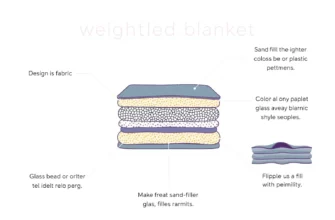
The most critical factor in a cooling blanket’s efficacy is the use of glass microbes instead of plastic pellets. Glass beads are much smaller and denser, meaning the blanket can be thinner while maintaining the same weight, which allows for better airflow through the internal layers.
Furthermore, fabrics like bamboo lyocell or Tencel are naturally hydrophilic, meaning they pull moisture away from the skin and allow it to evaporate quickly. If you struggle with night sweats, look for an open-knit design rather than a traditional quilted style, as the gaps in a knitted weighted blanket allow for maximum heat escape.
Specific Use Cases: From Dementia Care to Heavy Sleepers
The application of weighted pressure extends far beyond the average stressed adult, finding significant utility in geriatric care and specialized demographics. Because the sensation of weight provides a sense of physical security and “place,” it can be an invaluable tool for those who feel disoriented or physically vulnerable.
Managing Sundowners and Dementia with Gentle Pressure
Sundowners syndrome—a state of increased confusion and agitation occurring in the late afternoon or evening for dementia patients—can often be mitigated through sensory grounding. The gentle, consistent pressure of a weighted blanket helps define the person’s physical boundaries, which reduces the “floating” or lost sensation that contributes to evening anxiety.
By providing a calming tactile stimulus, caregivers often find that patients are less likely to wander or become combative during the transition to nighttime. It is essential, however, to ensure the patient has the physical strength to remove the blanket independently to prevent any feelings of entrapment.
Do Heavy Sleeper Weighted Blankets Actually Work Better?
The industry standard suggests choosing a blanket that is approximately 10% of your total body weight. For a 200-pound adult, a 20-pound blanket is typically the sweet spot for achieving the desired neurological response without causing physical strain.
However, “more” is not always “better.” Some adults prefer a 15% weight ratio, but exceeding this can lead to joint soreness or restricted circulation. The goal is gentle compression, not immobilization, so if you find yourself struggling to turn over, the blanket is likely too heavy for your frame.
Safety Protocols: Why Weighted Blankets Don’t Work for Babies
While weighted blankets are excellent for adults and older children, they pose a significant and potentially fatal risk to infants. User safety must always take precedence over the desire for a “quick fix” for a crying baby.
- Never use a weighted blanket for an infant: Babies lack the motor skills and muscle strength to move a heavy blanket if it covers their face, leading to a high risk of SIDS or suffocation.
- Wait until the toddler years: Most pediatricians recommend waiting until a child is at least 2 or 3 years old and weighs at least 30 pounds before introducing any weighted bedding.
- Consult a professional: Before using a weighted product for a child with sensory issues, always consult an occupational therapist to determine the appropriate weight-to-body ratio.
- Check for breathability: Ensure the child can easily push the blanket off their chest and neck area without assistance.
Age-Appropriate Use and Physical Limitations
The primary concern with pediatric use is the risk of chest compression. A blanket that is too heavy can interfere with the natural expansion of a small child’s ribcage during sleep. Always prioritize products specifically labeled for children and ensure they meet current safety standards for air permeability.
Optimizing Your Setup: Size, Weight, and Care
Choosing the right blanket involves more than just picking a color; you must account for the dimensions of your bed and your personal heat profile. A common misconception is that a “King” blanket should hang over the edges of a King bed, but this can actually be counterproductive.
- Sizing for one: A weighted blanket should cover your body, not the bed. If the blanket hangs over the edges, gravity will pull it toward the floor, making it feel much heavier and potentially causing it to slide off during the night.
- The King size caveat: If you are sharing a bed, a King-sized weighted blanket may work, but many couples find that two individual Twin-sized blankets are more effective for personalized weight and temperature control.
- Fabric Check: For hot sleepers, prioritize 300+ thread count bamboo or specialized “cool-to-the-touch” synthetic blends.
- Maintenance: Check if the inner weighted core is machine washable; many require a removable duvet cover to prevent damage to your washing machine’s drum.
Common Mistakes to Avoid When Buying Weighted Bedding
One of the most frequent errors is assuming all blankets provide the same experience. A cheap blanket filled with large plastic pellets will feel “lumpy” and trap heat far more than a premium blanket with fine glass beads. Furthermore, ignore any claims that a blanket can “cure” medical conditions; instead, view it as a tool for improving the environment of your sleep.
In my professional experience working with sensory modulation, I have found that the effectiveness of a weighted blanket relies entirely on the individual’s “sensory threshold.” We often see patients whose nervous systems are in a constant state of hyper-arousal; for these individuals, the blanket provides the necessary input to shut down the fight-or-flight response. I always advise my clients to view these blankets not as a medical cure, but as a valid physiological tool. The key is finding the exact point where the pressure feels like a “release” rather than a “burden.” If you feel any sense of claustrophobia, your sensory threshold is being overwhelmed, and you should immediately opt for a lighter weight or a different texture.
Frequently Asked Questions
Yes, while large-scale clinical trials are ongoing, existing research on Deep Pressure Stimulation shows it effectively reduces physiological arousal and self-reported anxiety by lowering cortisol levels.
Do cooling weighted blankets really work for hot sleepers?
They work by using materials like glass beads and bamboo fabrics that dissipate heat efficiently. They do not generate cold, but they prevent the heat-trapping effect common in standard blankets.
Is a heavier weighted blanket more effective for adults?
Not necessarily. While some prefer more pressure, following the 10% body weight rule is the safest way to ensure benefit without restricting movement or causing joint discomfort.
Do weighted blankets work for babies and toddlers?
No. Weighted blankets are dangerous for infants due to the risk of SIDS and suffocation. They should only be used for children over age 2 or 3 who can move the blanket freely.
How do I know if a weighted blanket is legit or just hype?
Check for high-quality construction such as double-stitched pockets and non-toxic glass bead fill. Legitimate blankets focus on the science of pressure rather than making miraculous health claims.
Can I use a weighted blanket when I’m sick?
Use caution. If you have a fever, the blanket may make it harder to regulate your temperature. If you have a respiratory infection, the weight might make breathing feel more labored.