- The Golden Rule: How Heavy Should a Weighted Blanket Be for Most People?
- Calculating the Ideal Weight for Your Body Type
- Quick Reference Weight Chart for All Ages
- How Heavy Should a Weighted Blanket Be for Adults and Couples?
- Choosing for Women, Men, and Different Body Compositions
- The Couples Dilemma: Sharing a King Size Weighted Blanket
- Safety Guidelines: How Heavy Should a Weighted Blanket Be for a Child?
- Weight Recommendations for Toddlers, Kids, and Teens
- Dos and Donts of Weighted Blanket Selection
- Beyond the Bed: Selecting Weighted Lap Blankets and Specialized Sizes
- How Much Should a Weighted Lap Blanket Weigh?
- Myth vs. Fact: Common Misconceptions About Blanket Weight
- Troubleshooting: What to Do If Your Blanket Feels Too Heavy or Too Light
- Signs Your Weighted Blanket is the Wrong Size
- Frequently Asked Questions
The Golden Rule: How Heavy Should a Weighted Blanket Be for Most People?
Finding the right weight for a sensory blanket is not a matter of guesswork; it is a calculation rooted in physiology. The standard industry recommendation is to select a blanket that weighs approximately 10% of your total body weight. This specific ratio is designed to trigger deep pressure stimulation without causing physical strain or restricting natural movement during sleep.
While the 10% rule serves as a reliable baseline, it is rarely a rigid limit. Most users find their “sweet spot” by adding one or two pounds to that initial calculation. The goal is to feel a firm, grounding sensation—similar to a deep hug—rather than feeling pinned to the mattress. If you are between standard product sizes, such as weighing 155 pounds and choosing between a 15-pound or 20-pound option, it is usually safer to round down unless you have prior experience with heavy pressure.
Calculating the Ideal Weight for Your Body Type
To determine how heavy a weighted blanket should be for your specific frame, you must look beyond the scale and consider your physical build. A 150-pound person with a high muscle density may perceive weight differently than someone with a smaller bone structure. When you calculate how heavy do you need a weighted blanket to be, always factor in your comfort with physical pressure. If you suffer from joint pain or claustrophobia, staying strictly at the 10% mark or even slightly below is advisable.
Weight distribution is arguably more important than the total poundage listed on the box. A 20-pound blanket designed for a King-sized bed will feel significantly lighter than a 20-pound blanket designed for a Twin-sized bed. This is because the weight is spread over a larger surface area. For the most effective deep pressure therapy, the weight should be concentrated on your body, not hanging off the sides of the mattress where gravity will pull the blanket toward the floor.
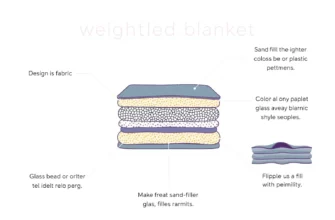
Individual comfort levels often fluctuate based on the filling material used. Blankets filled with ultra-fine glass beads tend to be thinner and contour more closely to the body, making the weight feel more “integrated.” In contrast, blankets using large plastic poly pellets can feel bulkier and may result in uneven weight distribution as the beads shift into the corners of the fabric pockets;
Quick Reference Weight Chart for All Ages
Use the following table as a clinical starting point. These recommendations align with general safety standards, but individual physical ability to move the blanket must always be the final deciding factor.
| User Body Weight (lbs) | Recommended Blanket Weight (lbs) | Primary User Demographic |
|---|---|---|
| 30 ⎻ 50 lbs | 3 ⎻ 5 lbs | Small Child (Ages 3+) |
| 50 ⎯ 80 lbs | 5 ⎻ 7 lbs | Child / Pre-teen |
| 80 ⎯ 110 lbs | 10 lbs | Teenager / Small Adult |
| 110 ⎯ 140 lbs | 12 ⎻ 15 lbs | Average Adult Woman |
| 140 ⎯ 190 lbs | 15 ⎻ 20 lbs | Average Adult Man / Woman |
| 190 ⎯ 240 lbs | 20 ⎻ 25 lbs | Large Adult |
| 240+ lbs | 25 ⎻ 30 lbs | Extra Large Adult |
How Heavy Should a Weighted Blanket Be for Adults and Couples?
Adults often have more flexibility in choosing weight because their skeletal systems are fully developed. However, this flexibility can lead to overestimating what the body actually needs for rest. For many men and women, the transition to a weighted blanket requires an adjustment period where the nervous system learns to process the constant proprioceptive input.
When selecting a blanket for a single adult, the dimensions of the blanket should match the person, not the bed. A common mistake is buying a Queen-sized weighted blanket for a single sleeper. A smaller throw-sized blanket (roughly 48×72 inches) ensures that the weight stays on top of you rather than being wasted on the empty space of the mattress.
Choosing for Women, Men, and Different Body Compositions
If you are an adult woman weighing approximately 125 lbs, a 12-pound blanket is the clinical “perfect” fit, but a 15-pound blanket is often the most accessible commercial size. If you find yourself asking how heavy should a weighted blanket be if I’m 125lbs, start with the 12-pound option if you are a side sleeper, as the weight concentrates on the hips and shoulders. Back sleepers can usually tolerate a slightly heavier load because the weight is spread across a broader surface area.
For seniors or those with mobility concerns, the 10% rule should be treated as a maximum rather than a target. As we age, skin sensitivity increases and joint integrity may decrease; A blanket that is too heavy can impede circulation or make it difficult to change positions during the night, which is a risk factor for pressure sores or stiffness. In these cases, a 5-7% weight ratio is often more therapeutic and significantly safer.
The Couples Dilemma: Sharing a King Size Weighted Blanket
Sharing a weighted blanket with a partner is one of the most frequent causes of product returns. The 10% rule completely breaks down in this scenario. For example, if one partner weighs 120 lbs and the other weighs 250 lbs, a 30-pound King blanket will likely be dangerous for the smaller partner and ineffective for the larger one. The weight will naturally migrate toward the person who moves more, often leaving one person “trapped” under a double layer of beads.
Safety risks are a real concern when sharing. If a blanket is heavy enough to satisfy a 200-pound man, it could potentially restrict the breathing or ribcage expansion of a much smaller partner during deep sleep. I always recommend using two separate Twin-sized weighted blankets instead of one King-sized unit. This allows each person to choose their ideal weight, prevents “blanket stealing,” and ensures that the therapeutic pressure remains consistent throughout the night without interference from a partner’s movements.
Safety Guidelines: How Heavy Should a Weighted Blanket Be for a Child?
Safety is the absolute priority when introducing weighted therapy to children. Unlike adults, children may not have the upper body strength to push a heavy blanket off their chest if they feel overheated or claustrophobic. Never use a weighted blanket for any child who cannot independently remove it or for infants under the age of two.
The formula for children is slightly more conservative: 10% of their body weight plus one pound. This ensures the child receives the calming benefits of deep pressure stimulation—which is particularly helpful for those with ADHD or sensory processing disorders—without the risk of physical exhaustion.
Weight Recommendations for Toddlers, Kids, and Teens
When determining how heavy of a weighted blanket a toddler can have, you must ensure they weigh at least 30 pounds and are over two years old. For a child weighing 40 pounds, a 4-pound or 5-pound blanket is the upper limit. Child-sized blankets must be smaller in dimensions, typically around 36×48 inches. If you put a large adult blanket on a child, the weight of the overhanging fabric can create a “leverage effect,” making the blanket feel much heavier than its actual poundage.
For teenagers, the transition to adult weights begins. An 85-pound child or a 108-pound boy is often in a transitional phase where a 10-pound “teen” blanket is appropriate. However, always monitor the first few nights of use. If the teenager complains of tingling in the limbs or wakes up feeling excessively tired, the blanket is likely too heavy and is taxing their muscles during sleep.
Dos and Donts of Weighted Blanket Selection
Choosing the right blanket involves more than just hitting a number on a scale. The construction of the blanket dictates how that weight interacts with your body.
- Do choose glass beads over plastic pellets: Glass beads are smaller and denser, allowing the blanket to be thinner and more breathable while maintaining its weight.
- Don’t buy based on mattress size: A weighted blanket should cover your body, not drape over the edges. If the blanket hangs off the side, gravity will pull the weight away from you, making it feel lighter on your chest and heavier on your feet.
- Do prioritize breathability: Heavy blankets trap heat. Look for cotton or bamboo covers to prevent night sweats, especially if you are using a blanket at the heavier end of the spectrum.
- Don’t ignore the “remove-ability” factor: If you cannot easily throw the blanket off your body with one hand, it is too heavy for safe use.
- Do check the stitching: High-quality blankets use smaller quilted squares (4×4 inches) to ensure the weight doesn’t bunch up in one corner.
Beyond the Bed: Selecting Weighted Lap Blankets and Specialized Sizes
Weighted therapy isn’t limited to sleep. Many people use portable weight to manage anxiety or improve focus during the day. However, the 10% rule does not apply to lap pads or lap blankets because the weight is concentrated on a very small area of the body—specifically the thighs and pelvic region.
How Much Should a Weighted Lap Blanket Weigh?
A weighted lap blanket usually ranges from 2 to 5 pounds. Because this weight is localized, it provides a powerful “grounding” effect that helps the brain focus on the task at hand. These are highly effective for office workers or students who struggle with restlessness or “fidgeting” during long periods of sitting.
If you are looking at specialized dimensions like a 48×72 blanket, you are looking at the “Goldilocks” size for single adults. This size is large enough to cover from the shoulders to the toes but small enough to keep the weight focused. A 15-pound blanket in a 48×72 size will feel much more intense than the same weight spread across a 60×80 Queen size. Always adjust your weight choice based on the density of the blanket’s dimensions.
Myth vs. Fact: Common Misconceptions About Blanket Weight
Myth: The heavier the blanket, the better it works for anxiety.
Fact: There is a point of diminishing returns. Excessive weight can trigger a “fight or flight” response if the body feels trapped, which actually increases cortisol levels instead of lowering them.
Myth: A weighted blanket can cure insomnia or sleep apnea.
Fact: While these blankets improve sleep hygiene and help with relaxation, they are not medical cures. In fact, people with sleep apnea should avoid weighted blankets unless cleared by a doctor, as the extra pressure on the chest can exacerbate breathing difficulties.
Troubleshooting: What to Do If Your Blanket Feels Too Heavy or Too Light
It is perfectly normal for a weighted blanket to feel “weird” for the first few nights. Your nervous system is processing a new type of sensory input. Most experts recommend a break-in period of 3 to 7 nights before deciding to return the product. Start by using the blanket over just your legs for the first hour of sleep, gradually pulling it up to your chest as you become accustomed to the sensation.
Signs Your Weighted Blanket is the Wrong Size
If you find yourself waking up with sore joints or a “bruised” feeling in the morning, the blanket is likely too heavy. Conversely, if you don’t feel any calming effect or find yourself still tossing and turning constantly, you may need to increase the weight by 2-5 pounds.
How to know how heavy your weighted blanket should be often comes down to one simple test: Can you comfortably turn from your back to your side? If you have to “struggle” or use significant core strength to roll over, the weight is excessive. Your weighted blanket is supposed to be a tool for relaxation, not a workout for your muscles during the night.
In my clinical experience, the success of weighted therapy relies on the concept of Deep Pressure Touch (DPT). This is the physical pressure that signals the brain to release serotonin and melatonin while decreasing cortisol. I always advise clients that the 10% rule is a safety ceiling, not a floor. For individuals with sensory processing sensitivities, the “feel” of the weight is often more important than the number. I strongly caution against using weighted products for anyone with respiratory issues, circulatory problems, or those recovering from surgery, as the added load can restrict blood flow or lung expansion. Always prioritize the ability to self-rescue—if you can’t get out from under it in five seconds, it’s not safe.
Frequently Asked Questions
Yes. If the blanket restricts your breathing, causes joint pain, or makes it difficult for you to roll over or get out of bed, it is too heavy. Safety requires that every user be able to remove the blanket independently and without effort.
Should I get a 15lb or 20lb weighted blanket if I weigh 170 lbs?
For a 170 lb individual, the 10% rule suggests 17 lbs. A 15 lb blanket is the safer choice for beginners or those who prefer a lighter touch, while a 20 lb blanket is better for those who specifically seek intense pressure. When in doubt, start with 15 lbs.
Are weighted blankets safe for toddlers?
Weighted blankets are generally not safe for toddlers under 2 years old or those weighing less than 30 lbs. They pose a significant suffocation risk for children who lack the strength to move the weight away from their face.
Does the weight of the blanket include the cover?
Most manufacturers list the weight of the inner weighted insert. However, a duvet cover can add 1-2 pounds to the total weight. High-quality brands will specify if the advertised weight is the “total system” weight or just the insert.
How heavy should a weighted blanket be for a 100 lb person?
A 100 lb person should typically use a 10 lb blanket. If they have high sensory needs, they might find a 12 lb blanket more effective, but they should not exceed 15% of their body weight.
Is it okay to use a weighted blanket every night?
Yes, nightly use is perfectly safe for healthy adults and children who meet the weight requirements. It can become a key part of your sleep hygiene routine as long as it does not cause physical discomfort or overheating.