- Understanding if Weighted Blankets are Safe for Dogs and Pets
- The Science of Calming: Do Weighted Blankets Work for Dogs?
- When Comfort Becomes a Risk: Are Weighted Blankets Dangerous for Dogs?
- The Danger of Internal Fillers and Choking Hazards
- Size Matters: Are Weighted Blankets Safe for Small Dogs and Cats?
- The Feline Perspective: Are Weighted Blankets Dangerous for Cats?
- Therapeutic Benefits: Do Weighted Blankets Help Dogs with Anxiety and Fireworks?
- Improving Rest: Do Weighted Blankets Help Dogs Sleep?
- Safe Usage Protocol: Can I Put a Weighted Blanket on My Dog Tonight?
- Why Hugging Dogs is Different from Weighted Pressure
- Frequently Asked Questions
Understanding if Weighted Blankets are Safe for Dogs and Pets
The rise of deep pressure therapy in human wellness has naturally crossed over into the pet industry. Many owners wonder if the same heavy blankets that help them sleep can also soothe a frantic Labrador during a thunderstorm.
While these tools offer significant therapeutic potential, their safety is not universal. The effectiveness of a weighted blanket depends entirely on the pet’s physical size, underlying health conditions, and the specific materials used in the blanket’s construction.
The Science of Calming: Do Weighted Blankets Work for Dogs?
The primary mechanism behind these blankets is deep pressure stimulation (DPS). This tactile input signals the autonomic nervous system to shift from a “fight or flight” state into a “rest and digest” state.
By applying gentle, distributed weight across the body, the blanket mimics the sensation of being held or “denned.” This process triggers the release of dopamine and serotonin while simultaneously reducing cortisol levels, which are the primary hormones associated with stress and agitation.
For many dogs, this proprioceptive input provides a grounded feeling. It helps them organize sensory information more effectively, which is why dogs with noise phobias or generalized anxiety often show a visible decrease in heart rate when using properly fitted calming aids.
When Comfort Becomes a Risk: Are Weighted Blankets Dangerous for Dogs?
The line between a therapeutic tool and a physical hazard is incredibly thin when dealing with weighted products. If a blanket is too heavy, it transitions from a “hug” to a restrictive weight that can impede a dog’s ability to expand its ribcage.
The most significant danger involves respiratory distress. A dog that cannot easily shift its weight or move out from under a blanket is at high risk of suffocation or heatstroke, especially if they are already in a panicked state.
Warning: Myth vs. Fact
Myth: Any weighted blanket is safe as long as the dog seems to like it.
Fact: A dog may stay under a blanket out of fear or lethargy even if it is struggling to breathe. You must ensure the blanket does not exceed 10% of the dog’s total body weight to prevent chest compression.
The Danger of Internal Fillers and Choking Hazards
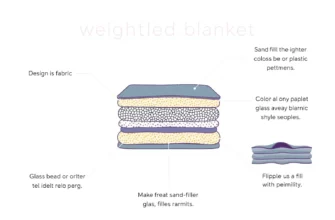
Beyond the weight itself, the physical components of the blanket pose a hidden threat. Most weighted blankets use small pellets or beads to provide mass, and these are often irresistible to dogs that enjoy chewing.
If a dog punctures the outer fabric, they may ingest the filler. Non-toxic glass beads or plastic poly-pellets can cause life-threatening gastrointestinal blockages that require emergency surgery to resolve;
Furthermore, these tiny beads are significant choking hazards. A dog that accidentally inhales the filler while chewing can experience immediate airway obstruction or aspiration pneumonia if the particles reach the lungs.
Size Matters: Are Weighted Blankets Safe for Small Dogs and Cats?
The risks associated with weighted therapy scale exponentially as the size of the animal decreases. While a 70-pound Golden Retriever might easily toss aside a 5-pound blanket, that same blanket could be immobilizing and potentially fatal for a Toy Poodle or a Maine Coon.
Small pets have much smaller lung capacities and more fragile skeletal structures. A blanket that feels like a light lap pad to a human can feel like hundreds of pounds of crushing pressure to a 10-pound animal.
| Pet Weight | Maximum Safe Blanket Weight | Risk Level |
|---|---|---|
| 5 ─ 10 lbs | 0.5 ─ 1 lb (Use extreme caution) | High: Risk of chest compression |
| 11 ─ 25 lbs | 1.5 ─ 2.5 lbs | Moderate: Must be able to exit freely |
| 26 ─ 50 lbs | 3 ─ 5 lbs | Low: With proper supervision |
| 51+ lbs | 5 ー 10 lbs | Low: Standard safety rules apply |
The Feline Perspective: Are Weighted Blankets Dangerous for Cats?
Cats are uniquely sensitive to environmental pressure and have highly specialized respiratory systems. Unlike dogs, cats are also more prone to “feline hyperesthesia,” where certain types of touch or pressure can actually cause more stress rather than less.
Using a human-grade weighted blanket on a cat is never acceptable under any circumstances. The weight of even a “light” 10-pound human blanket is roughly equivalent to a human trying to sleep under a 150-pound lead sheet.
If you want to provide deep pressure for a cat, look for products specifically designed for felines. These are often self-warming pads or very light, flexible wraps that do not use heavy internal beads.
Therapeutic Benefits: Do Weighted Blankets Help Dogs with Anxiety and Fireworks?
For dogs that suffer during the Fourth of July or heavy summer storms, weighted blankets can be a game-changer. These events create a sensory overload that many dogs cannot process without assistance.
The blanket acts as a “grounding” mechanism. When the world outside is loud and unpredictable, the consistent pressure of the blanket provides a predictable sensory input that helps the dog focus on their own body rather than the noise outside.
It is important to remember that a blanket is a tool, not a cure. Combine weighted therapy with pheromone diffusers, white noise, and a “safe space” like a covered crate to create a comprehensive anxiety management plan.
Improving Rest: Do Weighted Blankets Help Dogs Sleep?
Senior dogs or those with cognitive dysfunction often struggle with “sundowning” or restless sleep patterns. They may pace the house at night or find it difficult to settle into a deep sleep state.
A light weighted blanket can help these dogs feel secure enough to stop pacing. By providing a sense of physical boundaries, the blanket can encourage longer periods of REM sleep, which is vital for cognitive health in aging pets.
Creating a “den” environment by placing the blanket over their favorite bed—rather than directly over their head—allows the dog to reap the benefits of the weight while maintaining full control over their movement.
Safe Usage Protocol: Can I Put a Weighted Blanket on My Dog Tonight?
If you are considering using a weighted blanket for your pet tonight, you must follow a strict safety protocol. You should never leave a dog alone while they are using a weighted product for the first time.
The most important rule is freedom of exit. The dog must be able to crawl out from under the blanket without any human assistance. If they look “pinned” or are panting heavily, the blanket is too heavy or they are overheating.
- Supervise every session: Never leave your dog unattended under a weighted blanket for long periods.
- Check for “The Chew Factor”: Inspect the blanket for any loose threads or small holes before every use.
- Keep the head clear: Never cover a dog’s head or neck; the weight should only be on the torso and hindquarters.
- Monitor temperature: Dogs regulate heat through their paws and panting; ensure they don’t get too hot under the fabric.
- Introduce it slowly: Let the dog sniff the blanket and lay near it before placing it on them.
Why Hugging Dogs is Different from Weighted Pressure
There is a common debate in the dog training world about whether hugging dogs is stressful. Many dogs find a physical hug restrictive because it limits their “flight” response, leading to increased anxiety or even a bite.
Weighted blankets are different because they provide passive pressure rather than active restraint. Unlike a human hug, which involves gripping and movement, a blanket is a static weight.
When used correctly, the dog retains the choice to stay or leave. This element of choice is the critical difference between a comforting therapeutic tool and a stressful physical restraint.
In my professional experience, I have seen weighted blankets work wonders for noise phobias, but I always advise extreme caution for specific breeds. I strictly forbid the use of weighted blankets for brachycephalic breeds, such as Pugs, French Bulldogs, or English Bulldogs, because their respiratory systems are already compromised. Furthermore, if your dog has any form of osteoarthritis or hip dysplasia, a blanket that is too heavy can actually cause joint pain rather than relief. Always consult your vet to ensure your dog has the physical strength to move under the weight without straining their muscular system.
Frequently Asked Questions
Yes, if the blanket is too heavy, it can cause fatal suffocation by compressing the chest or cause heatstroke. Additionally, if a dog eats the internal beads, it can lead to a fatal intestinal blockage.
What happens if my dog eats the beads inside a weighted blanket?
This is a medical emergency. The beads can cause a gastrointestinal obstruction or be aspirated into the lungs, both of which require immediate veterinary intervention.
Are weighted blankets safe for puppies?
I generally advise against using them for puppies. Puppies are notorious chewers and have developing lungs that are more susceptible to the pressure of heavy weights.
How heavy should a dog’s weighted blanket be?
The safest standard is no more than 10% of the dog’s total body weight. For a 50-pound dog, the blanket should not exceed 5 pounds.
Can I use my own human weighted blanket on my pet?
No. Human blankets are designed for much larger bodies and are far too heavy for almost any dog or cat, posing a severe risk of injury or death.