- The Critical Safety Risks of Using an Infant Weighted Blanket
- How Weighted Pressure Impacts Infant Breathing
- Entrapment and Suffocation: A Real Threat
- Why the AAP Strictly Advises Against Weighted Bedding for Babies
- The Danger of Overheating and Deep Sleep
- Pediatrician-Approved Alternatives for Calming a Fussy Infant
- The Safety of Non-Weighted Sleep Sacks and Swaddles
- White Noise and Temperature Control
- Essential Checklist for a Safe Sleep Environment
- Expert Perspective: Infant Sleep Safety
- Frequently Asked Questions
The Critical Safety Risks of Using an Infant Weighted Blanket
The rise of weighted sleep products for adults has naturally led to a surge in similar items marketed for infants. While these products promise longer sleep and a “calming touch,” they represent a significant departure from established safe sleep standards. For a newborn or infant, the physical environment of their crib must be strictly controlled to prevent accidental harm.
Parents often turn to weighted bedding out of desperation for rest, yet the physiological reality of an infant makes these products inherently dangerous. Unlike adults, babies lack the muscle density and skeletal maturity to counteract external pressure. When a weighted product is placed on a small body, it does not just provide comfort; it creates a physical barrier to basic biological functions.
How Weighted Pressure Impacts Infant Breathing
An infant’s ribcage is significantly more flexible and compliant than that of an adult. Because their bones are still largely cartilaginous, the chest wall can easily compress under even a small amount of external weight. This compression directly interferes with chest wall movement, making every breath more labor-intensive for the child.
When a baby’s breathing is restricted, they may experience respiratory distress in babies, a condition where oxygen intake decreases and carbon dioxide levels rise. Because infants have a higher metabolic rate and lower oxygen reserves, any reduction in lung expansion can lead to rapid oxygen desaturation. The weight essentially acts as a low-level mechanical restriction on the diaphragm and intercostal muscles.
Entrapment and Suffocation: A Real Threat
The primary concern with any loose or heavy bedding in a crib is the risk of airway obstruction. Infant suffocation risks increase exponentially when a product can shift or be pulled over the nose and mouth. Even “wearable” weighted sacks pose a threat if the weight shifts toward the neck or face during movement.
It is vital to remember that motor skill development in the first year of life is a gradual process. A baby who is three or four months old may have the strength to wiggle into a dangerous position but lacks the strength or coordination to push a weighted object off their face. If the blanket or sack bunches up, the infant becomes trapped under a load they cannot displace, leading to a life-threatening situation within minutes.
Myth: Weighted blankets help babies sleep longer by mimicking a parent’s hug.
Fact: The “deep sleep” induced by weighted products is often a sign of a suppressed arousal response. A baby who sleeps too deeply may fail to wake up when their breathing is compromised, which is a major risk factor for SIDS.Myth: If a product is sold in major retail stores, it must be safety-tested and approved.
Fact: The infant sleep market is often under-regulated. Many weighted sleep sacks were sold for years before the American Academy of Pediatrics (AAP) issued formal warnings against them. Retail availability does not equal pediatric safety certification.
Why the AAP Strictly Advises Against Weighted Bedding for Babies
In recent updates to safe sleep guidelines, the American Academy of Pediatrics (AAP) has been explicit: weighted blankets, weighted swaddles, and weighted sleep sacks have no place in a safe sleep environment. The organization emphasizes that SIDS prevention relies on the infant’s ability to wake up easily if they experience a breathing obstruction or a drop in oxygen.
The danger lies in the very “calming” effect these blankets provide. By applying pressure, these products can force an infant into a level of sedation that bypasses their natural survival instincts. If a baby stops breathing or experiences a heart rate drop, their brain needs to trigger an “arousal response” to restart the breathing cycle. Weighted products significantly dampen this internal alarm system.
The Danger of Overheating and Deep Sleep
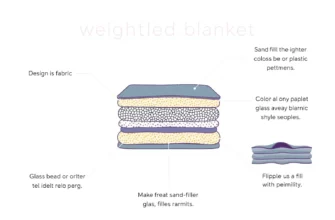
Thermal regulation is another critical component of infant safety. Overheating in infants is a known contributor to SIDS, and weighted products are notorious for trapping body heat. Most weighted blankets use glass beads or plastic pellets sewn into layers of fabric, which creates an insulating effect that prevents the baby’s body from cooling down naturally.
Because babies cannot sweat as effectively as adults, their core temperature can spike rapidly. A baby who is too hot will often fall into an unnaturally deep sleep, further compromising their arousal mechanism. Maintaining a clear, breathable sleep space is the only way to ensure the baby can regulate their temperature and wake up when they need to.
| Feature | Infants (0-12 Months) | Toddlers (2+ Years) |
|---|---|---|
| Recommended Weight | 0% of body weight (No weights allowed) | Maximum 10% of body weight |
| Safety Standard | Strictly prohibited by AAP guidelines | May be used under professional supervision |
| Primary Risk | Suffocation, SIDS, and chest compression | Entrapment (if the child cannot remove it) |
| Developmental Need | Must be able to move freely and wake easily | Must be able to push the blanket off independently |
Pediatrician-Approved Alternatives for Calming a Fussy Infant
It is entirely understandable why parents seek out weighted solutions. Sleep deprivation is a heavy burden, and a fussy baby can leave caregivers feeling helpless. However, there are several evidence-based methods to soothe a child that do not involve the risks associated with weighted materials.
The goal is to provide a sense of security and “snugness” without restricting the baby’s ability to breathe or move. Focus on creating a sensory environment that mimics the womb through sound, temperature, and gentle, non-weighted containment.
The Safety of Non-Weighted Sleep Sacks and Swaddles
If your baby enjoys the feeling of being held, a standard, non-weighted wearable blanket is an excellent alternative. These products provide swaddling alternatives that keep the baby warm without the need for loose blankets in the crib. They allow for healthy hip development while providing a cozy layer of fabric that many babies find comforting.
For newborns who still have a strong startle reflex, a traditional swaddle (using a thin muslin cloth) can be used until the baby shows signs of trying to roll over. Once a baby can roll, wearable blanket benefits become even more apparent, as they keep the arms free while maintaining a consistent body temperature without the risk of the fabric shifting over the face.
White Noise and Temperature Control
Optimizing baby sleep hygiene often has a more significant impact on sleep quality than any physical product. Using a white noise machine can provide ambient noise for babies that masks household sounds and mimics the constant rushing sound of blood flow they heard in the womb. This helps the baby transition between sleep cycles without fully waking up.
Additionally, keeping the nursery at a consistent temperature (ideally between 68 and 72 degrees Fahrenheit) prevents the restlessness caused by being too hot or too cold. Check the baby’s chest or the back of their neck to gauge their temperature; their hands and feet are usually cooler than their core and are not a reliable indicator of warmth.
Essential Checklist for a Safe Sleep Environment
To ensure your baby is as safe as possible, always return to the “ABC” fundamentals of sleep. These guidelines have been proven to reduce the incidence of sleep-related infant deaths by over 50% since their introduction.
- A is for Alone: The baby should sleep in their own crib or bassinet, free of pillows, stuffed animals, bumpers, or blankets.
- B is for Back: Always place your baby on their back for every sleep, including naps. Side sleeping is not safe as the baby can easily roll onto their stomach.
- C is for Crib: Use a firm sleep surface covered only by a tight-fitting sheet. A soft mattress or a sofa can create dips that lead to suffocation.
- Temperature Check: Ensure the room is cool and the baby is dressed in no more than one layer more than an adult would wear in the same environment.
- No Weights: Verify that no part of the baby’s sleepwear or bedding contains weights, beads, or heavy embroidery.
Expert Perspective: Infant Sleep Safety
In my professional experience working with families, the “reward” of an extra hour of sleep never justifies the “risk” of a weighted product. I have seen marketing materials that use medical-sounding terms like “proprioceptive input” to sell these blankets to tired parents, but the anatomy of an infant simply cannot handle that pressure. If a sleep product is weighted, it is not for an infant. I always advise parents to focus on the basics: a firm mattress, a safe sleep sack, and a consistent routine. Your baby’s ability to wake up when they are uncomfortable is their most important survival skill; we must never use a product that dampens that reflex.
Frequently Asked Questions
No. Marketing labels do not reflect medical safety. The AAP explicitly warns against all weighted sleep products for infants due to risks of SIDS and suffocation.
What is the minimum age for a child to use a weighted blanket?
Most experts agree weighted blankets should only be used by children over age 2 who weigh at least 30 pounds and can remove the blanket themselves. Always consult a pediatrician first.
Do weighted blankets help with infant reflux or colic?
While they are marketed as soothing, there is no evidence they treat reflux or colic. In fact, the pressure on the abdomen could potentially worsen reflux symptoms while introducing safety risks.
How can I tell if my baby is too hot during sleep?
Check for signs like sweating, damp hair, or a chest that feels hot to the touch. If your baby’s skin is flushed or they are breathing rapidly, they are likely overheating.
What should I do if my baby only sleeps when held or weighted?
Focus on a gentle transition. Use a standard, non-weighted sleep sack for security and use white noise to create a soothing environment. Consistency in a safe crib will eventually lead to better sleep habits.