- Why do my feet hurt in a cold plunge? The science of the cold bite
- Understanding vasoconstriction and your peripheral nerves
- Is it normal for ankles and toes to feel numb or painful?
- Why your ankles hurt in a cold plunge specifically
- Dealing with joint pain after a cold plunge
- The difference between cold therapy and joint irritation
- How to stop your feet from hurting during the plunge
- Protective gear and acclimation strategies
- Why do my feet hurt so bad in cold plunge? When to see a doctor
- Signs of Raynaud’s and cold hypersensitivity
- Expert Perspective: The “Claw” and the Hunting Response
- Frequently Asked Questions
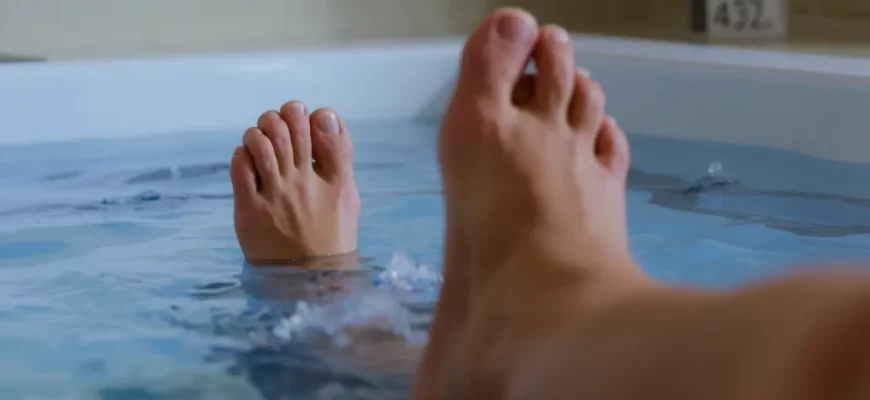
Why do my feet hurt in a cold plunge? The science of the cold bite
Stepping into a tub of near-freezing water triggers an immediate, systemic alarm. For many, this isn’t just a mental challenge; it manifests as a sharp, stinging sensation in the feet often referred to as the “cold bite.”
This pain is a primitive survival mechanism designed to keep you alive in harsh environments. While your mind knows you are safe in a controlled plunge, your biology assumes you are facing a life-threatening thermal crisis.
Understanding vasoconstriction and your peripheral nerves
The moment your skin touches the water, your sympathetic nervous system initiates vasoconstriction. This process involves the smoothing muscles in your blood vessel walls tightening to narrow the passage, effectively shunting blood away from your skin and toward your vital organs. Because your feet are at the furthest point from your heart, they are the first to lose this warm blood supply to preserve your core temperature.
As blood flow drops, the temperature of the tissue in your feet plummets. This triggers nociceptors, which are specialized pain receptors in the skin. These receptors send rapid-fire signals to your brain that something is wrong. When the water is below 50°F (10°C), these nerves can switch from sending “cold” signals to “pain” signals almost instantly. The sharp stinging you feel is literally your nerves firing at their maximum threshold to force you out of the water.
Furthermore, cold water impacts the speed at which your nerves can transmit information. While initial pain is sharp due to A-delta fiber activation, the lingering deep ache comes from slower C-fibers. This combination creates a “throbbing” sensation that many beginners find unbearable during their first few sessions.
Is it normal for ankles and toes to feel numb or painful?
It is perfectly normal for your extremities to feel like they are being squeezed in a vise or pricked by thousands of needles. However, distinguishing between a healthy physiological response and a potential injury is vital for long-term safety.
Most practitioners find that the peak of the pain occurs between the 30-second and 90-second mark. After this, a strange phenomenon called the Hunting Response may occur, where the body briefly dilates blood vessels in the feet to provide a small burst of warmth, though this is often short-lived.
| Sensation | Normal Adaptation Pain | Warning Signs (Stop Immediately) |
|---|---|---|
| Skin Color | Pinkish-red or slightly pale. | Waxy white, blue, or deep purple patches. |
| Pain Type | Sharp stinging that fades after 2 minutes. | Intense, localized “electric shock” sensations. |
| Sensation | General numbness or “pins and needles;” | Total loss of motor control in the toes. |
| Recovery | Warmth and feeling return within 15 minutes. | Numbness or pain lasting more than an hour. |
Why your ankles hurt in a cold plunge specifically
You might notice your calves feel fine while your ankles are screaming in protest. This happens because the ankle joint has very little adipose tissue (fat) or muscle mass to act as insulation. The bone, tendons, and ligaments are situated very close to the surface of the skin, allowing the cold to penetrate the joint capsule almost immediately.
When the synovial fluid inside the ankle joint cools down, it becomes more viscous and “thick.” This changes the pressure within the joint and can cause a deep, structural ache that feels different from the surface sting on your skin. Protecting the ankles is often the hardest part of the acclimation process because there is simply no natural “buffer” to slow down the heat loss from the bone.
Dealing with joint pain after a cold plunge
While the goal of cold therapy is often to reduce inflammation, some users find themselves dealing with stiff or aching joints once they exit the tub. This paradoxical effect usually stems from how the cold affects connective tissues like tendons and ligaments.
Cold water causes collagen fibers in your joints to contract and become less elastic. If you have had previous injuries or suffer from mild arthritis, this contraction can temporarily increase “mechanical” pain. It is not necessarily a sign of new damage, but rather a temporary change in the viscoelastic properties of your joint tissues.
The difference between cold therapy and joint irritation
The line between therapeutic benefit and irritation is often found in the duration of the plunge. If you stay in too long, the cold moves past the superficial layers and begins to chill the deep tissue of the joint. This can lead to a “rebound” inflammation where the body overreacts during the rewarming process.
To mitigate this, gentle movement is essential immediately after exiting the water. Instead of standing still or jumping into a hot shower, try air squats or walking. This encourages blood to return to the joints naturally. Avoid static stretching immediately after a plunge, as your tissues are less pliable and more prone to micro-tearing when they are chilled.
How to stop your feet from hurting during the plunge
If the pain in your feet is so distracting that you cannot focus on your breath or stay in for your target duration, you need to change your strategy. You do not have to “tough it out” to get the metabolic and mental benefits of cold water immersion.
- Wear Neoprene Booties: Diving or surfing booties (2mm to 5mm thickness) are the gold standard. They trap a thin layer of water against your skin which your body warms up, creating a thermal barrier.
- The “Toe-Off” Method: Keep your feet out of the water for the first half of the plunge. Once your body has stabilized its initial shock response, submerge your feet for the final minute.
- Gradual Entry: Instead of jumping in, walk in slowly. This allows the vasoconstriction to happen more progressively rather than all at once.
- Active Toe Movement: Wiggling your toes while submerged can help maintain a tiny amount of circulation and distract the brain from the pain signals.
- Focused Exhalation: When the “bite” hits, double the length of your exhales. This modulates the vagus nerve and lowers the perceived intensity of the pain.
Protective gear and acclimation strategies
Many elite athletes use neoprene gear specifically because the feet and hands are “radiators” for heat. By insulating these specific points, you can stay in the water longer and allow your core and large muscle groups (like the quads and back) to receive the therapeutic benefits without your feet forcing an early exit.
If you prefer to go barefoot, you must focus on incremental exposure. Start with 30-second plunges and increase by only 15 seconds every few sessions. This gives your peripheral nervous system time to “desensitize” to the cold stimulus. Over time, your brain will stop interpreting the cold as an emergency, and the stinging sensation will transform into a dull, manageable coldness.
Why do my feet hurt so bad in cold plunge? When to see a doctor
For a small percentage of people, the pain is not just a “bite” but a severe, debilitating reaction. If your feet turn white, then blue, and take a long time to return to a normal color, you may be dealing with more than just a typical cold response.
Warning: Never ignore a complete loss of feeling that does not return within 20 minutes of exiting the water. If your skin feels hard or “wooden” to the touch, you may be experiencing the early stages of frostnip, even in water above freezing.
Signs of Raynaud’s and cold hypersensitivity
Raynaud’s Disease is a condition where the small arteries that supply blood to your skin overreact to cold temperatures. This causes a vasospasm that can completely shut off blood flow to the fingers and toes. The skin will often turn stark white or ghostly blue, and the eventual rewarming can be incredibly painful, involving intense throbbing or burning.
If you suspect you have Raynaud’s, consult a physician before continuing cold plunges. While some people with mild Raynaud’s can plunge using thick neoprene booties, others may find that the extreme temperature change triggers a hyper-reactive response that can lead to tissue damage. Another rare condition is Cold Urticaria, where the skin develops hives or welts in response to the cold. If you see physical bumps or rashes forming on your feet or ankles, stop your sessions and seek medical advice.
Expert Perspective: The “Claw” and the Hunting Response
In my professional experience working with high-performance athletes, the “clawing” sensation in the feet and hands is the most common reason people quit their cold therapy routine prematurely. I always advise my clients to recognize that pain is a signal, but not always a danger. The cramping you feel is often a result of the Hunting Response—the body’s attempt to balance core heat preservation with extremity protection. I have found that wearing 3mm neoprene socks allows most people to double their duration, which actually leads to better systemic results than going barefoot and hopping out after 30 seconds because the pain was too high.
Frequently Asked Questions
Yes, a sharp stinging or burning sensation is a standard physiological response to rapid vasoconstriction and the activation of cold-sensitive nociceptors in the skin.
How long should the numbness last after I get out?
Sensation should typically return within 10 to 20 minutes. If your feet remain numb for over 30 minutes, you likely stayed in the water too long for your current tolerance level.
Will wearing socks help with the pain?
Regular cotton socks are useless, but neoprene booties are highly effective. They create a thermal micro-climate around your feet that significantly reduces the “cold bite.”
Why do my fingers go numb but my core feels fine?
Your body prioritizes the heart, lungs, and brain. It will willingly sacrifice blood flow to your extremities (fingers and toes) to ensure your core temperature remains stable.
Can cold plunging cause permanent nerve damage in my feet?
Permanent damage is extremely rare in water above 34°F unless you stay submerged for an excessive period (usually 20+ minutes). Always listen to your body’s signals to avoid frostnip.
Should I keep my feet out of the water if they hurt too much?
Absolutely. Keeping your feet or hands out of the water (the “toe-off” or “hand-out” method) is a valid way to build cold tolerance without the distraction of extreme extremity pain.