- Why the Joe Rogan Cold Plunge Became a Cultural Phenomenon
- The Exact Joe Rogan Cold Plunge Time and Temperature
- The Science of the Chill: Dr. Rhonda Patrick and Peter Attia’s Protocols
- The Peter Attia Sauna and Cold Plunge Sequence
- Comparing High-Performance Routines: Robbins, Tate, and Goggins
- Tony Robbins’ Cold Water Morning Ritual
- Finding the Right Gear: Joe Rogan’s Cold Plunge Brand and Alternatives
- Is a Professional Cold Plunge Worth the Investment?
- Safety First: How to Avoid Common Cold Exposure Mistakes
- Understanding the Afterdrop and How to Warm Up Safely
- The Step-by-Step Blueprint for Your First 30 Days
- Expert Perspective: The Minimum Effective Dose
- Frequently Asked Questions
Why the Joe Rogan Cold Plunge Became a Cultural Phenomenon
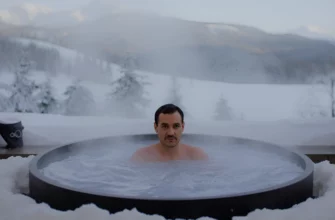
Joe Rogan did not invent the ice bath, but he certainly mainstreamed it for the modern era. What started as a recovery tool for elite athletes has transformed into a daily psychological ritual for millions of his listeners. Rogan’s advocacy stems from a desire to “do difficult things” to build mental resilience, moving the practice from the locker room to the home garage.
His transition into daily deliberate cold exposure wasn’t just about physical inflammation; it was about attacking the voice in your head that tells you to quit. By documenting his struggles and triumphs with the freezing water on social media, Rogan provided a blueprint for how a high-stress lifestyle can be managed through hormetic stress—the concept that small doses of “poison” or stress can actually make the body stronger.
The Exact Joe Rogan Cold Plunge Time and Temperature
Rogan’s protocol is notoriously aggressive and not for the faint of heart. He typically targets a temperature range between 34 and 40 degrees Fahrenheit, which is significantly colder than the standard 50-degree therapeutic baseline. At these temperatures, the water is just a few degrees away from freezing, requiring specialized chillers to maintain.
When it comes to duration, Rogan usually stays submerged for 3 to 5 minutes per session. He often pairs this with a rigorous sauna session, creating a contrast therapy loop that maximizes the circulatory response. For Rogan, the goal isn’t just to “get cold,” but to reach a state of systemic shivering, which triggers the metabolic benefits he frequently discusses with experts on his show. Consistency is his primary metric; he views the daily plunge as a non-negotiable part of his morning, much like a cup of coffee or a workout.
The Science of the Chill: Dr. Rhonda Patrick and Peter Attia’s Protocols
While Rogan provides the anecdotal “proof of concept,” researchers like Dr. Rhonda Patrick and Dr. Peter Attia provide the hard data. The biological shift that occurs when you submerge your body in freezing water is profound, involving a massive release of neurotransmitters and a reorganization of how your body handles energy. It is less about “cooling down” and more about triggering a survival mechanism that resets the central nervous system.
Dr. Rhonda Patrick has extensively documented the role of cold shock proteins, specifically RBM3, which has been shown in animal studies to protect the brain from neurodegenerative decline. She also emphasizes the 200-300% spike in norepinephrine that occurs almost immediately upon immersion. This isn’t just a “feel-good” chemical; it is a potent anti-inflammatory and a primary driver of the mental clarity people report after a plunge.
The Peter Attia Sauna and Cold Plunge Sequence
Dr. Peter Attia, a specialist in longevity, takes a more calculated approach to cold exposure, often integrating it into a broader “Contrast Therapy” routine. Attia focuses on the hemodynamic shift—the movement of blood from the extremities to the core and back again. By using a high-heat sauna (180°F+) for 20 minutes before a 3-minute cold plunge, you force the vascular system to rapidly dilate and then constrict, which acts as a “workout” for your blood vessels.
One critical aspect Attia discusses is managing the afterdrop effect. This occurs when blood begins to flow back to the skin’s surface after you leave the cold water, cooling the core temperature even further. To mitigate this, Attia often recommends ending on the cold to force the body to reheat itself metabolically, rather than relying on external heat. This “active rewarming” is where the metabolic magic happens, as the body burns calories to maintain homeostasis.
Comparing High-Performance Routines: Robbins, Tate, and Goggins
Different high-performers use the cold for different psychological ends. For some, it is a metabolic tool; for others, it is purely a weapon for mental warfare. Understanding these variations helps you choose a protocol that aligns with your specific goals, whether they are physical recovery or building a “calloused mind.”
| Influencer | Primary Goal | Typical Protocol | Key Philosophy |
|---|---|---|---|
| Tony Robbins | Neurological Priming | 57°F for 1 minute | Immediate “state change” to start the day. |
| Andrew Tate | Discipline / Stoicism | Unheated, varying temps | Doing it specifically because he hates it. |
| David Goggins | Mental Callousing | Longer durations, ice-heavy | Seeking discomfort to build a resilient spirit. |
| Joe Rogan | Recovery & Resilience | 34-40°F for 3-5 minutes | Physical recovery and mental “reset.” |
These influencers demonstrate that you don’t need a 34-degree tub to see results. Tony Robbins, for instance, uses a 57-degree plunge as part of his “priming” routine. While this temperature is much warmer than Rogan’s, the suddenness of the immersion is enough to trigger a total neurological reset, shifting the body from a sympathetic (fight or flight) state into a focused, alert state of readiness.
Tony Robbins’ Cold Water Morning Ritual
Tony Robbins has been a vocal advocate of “priming” for decades. His morning routine includes a plunge into 57-degree water immediately after waking. Unlike the long, grueling sessions Goggins might prefer, Robbins uses the cold as a biological “on switch.” He doesn’t stay in long enough to shiver; he stays in long enough to change his physiology.
This “priming” effect is rooted in vagus nerve stimulation. The cold water hitting the face and neck triggers the “mammalian dive reflex,” which slows the heart rate and increases heart rate variability (HRV). For Robbins, the cold plunge is the foundation of his daily habit stack, ensuring he is operating at a peak state before he ever checks an email or takes a meeting.
Finding the Right Gear: Joe Rogan’s Cold Plunge Brand and Alternatives
If you want to replicate Joe Rogan’s setup, be prepared to invest. Rogan has been seen using several high-end units, most notably the BlueCube and the Morozko Forge. These aren’t just tubs; they are industrial-grade appliances designed to keep water at near-freezing temperatures indefinitely. The primary advantage of these units is their cooling power and filtration.
While a standard bathtub might take 40 lbs of ice to reach 50 degrees, a Morozko Forge can actually produce its own ice. This level of convenience is what allows Rogan to maintain his daily consistency. However, for those on a budget, the market has exploded with alternatives ranging from insulated inflatable pods to DIY chest freezer conversions. The key is finding a balance between temperature control and ease of maintenance.
Is a Professional Cold Plunge Worth the Investment?
When deciding between a $5,000 professional unit and a $100 stock tank, the biggest factor is water sanitation. Professional units like The Cold Plunge or BlueCube feature ozone filtration and UV light systems that keep the water clean for months. In a DIY setup, you are responsible for manual cleaning and water changes, which can become a barrier to consistency.
For those starting out, budget-friendly options like the “Ice Barrel” or simple inflatable tubs offer a low-cost entry point. You will spend more on ice in the long run, but it allows you to test your commitment before buying a permanent fixture. Look for 1/2 horsepower chillers if you plan to build your own, as smaller chillers often struggle to reach the “Rogan-level” temps of 38 degrees during the summer months.
Safety First: How to Avoid Common Cold Exposure Mistakes
Cold plunging is a powerful tool, but it carries real risks if approached with a “macho” attitude. The most common mistake is hyperventilating during entry. When you hit the water, your body’s natural reaction is to gasp. If you don’t control this, you risk a vasovagal response or, in extreme cases, passing out. Always focus on a long, slow exhale as you submerge.
- Never plunge alone if you are pushing the limits of temperature or time.
- Avoid breath-holding while underwater; the risk of shallow water blackout is real and can be fatal.
- Don’t jump into a hot shower immediately after a plunge; this can cause “flash vasodilation” and lead to fainting.
Warning: Individuals with a history of heart disease or high blood pressure should consult a doctor before attempting cold water immersion. The sudden spike in blood pressure during the “cold shock” phase can put significant strain on the cardiovascular system.
Understanding the Afterdrop and How to Warm Up Safely
The “Afterdrop” is a phenomenon where your core temperature continues to fall after you have exited the water. This happens because the cold blood from your extremities begins to circulate back to your heart. To combat this, many experts recommend the “Horse Stance” method—an isometric squat combined with slow arm movements that generates internal heat without the shock of an external heat source.
Warming up should be a gradual process. Instead of a hot shower, try light movement like walking or bodyweight squats. This forces your metabolic system to “earn” its warmth. If you find yourself shivering uncontrollably for more than 20 minutes, you stayed in too long. The goal is a 3-5 minute dose, not an endurance contest that leaves you hypothermic for the rest of the afternoon.
The Step-by-Step Blueprint for Your First 30 Days
You don’t need to jump into a 34-degree tank on day one. In fact, doing so is a recipe for a quick exit from the hobby. Follow this 4-week progression to build the necessary thermal tolerance and mental discipline required for a long-term practice.
- Week 1: The Cold Shower Finish. Take your normal warm shower, but turn it to pure cold for the final 30-60 seconds. Focus on controlling your breath and keeping your heart rate down.
- Week 2: The Full Cold Shower. Start the shower cold and stay under for 2 full minutes. Ensure the water hits your upper back and chest, where most of your brown fat stores are located.
- Week 3: The 60-Degree Plunge. Find a local spa or use a bathtub with some ice. Aim for 60 degrees Fahrenheit for 3 minutes. This is the “gateway” temperature where you begin to feel the norepinephrine spike.
- Week 4: The 50-Degree Standard. Lower the temperature to 50-55 degrees. Complete three sessions of 3-5 minutes each. By the end of this week, you will have established the habit and can begin exploring lower temperatures if desired.
Expert Perspective: The Minimum Effective Dose
In my professional experience, many people overcomplicate cold exposure by chasing the lowest possible temperature. I always advise my clients to look at the Soberg Principle, named after researcher Dr. Susanna Soberg. Her research suggests that the minimum effective dose for metabolic benefits is roughly 11 minutes of total cold exposure per week, spread across 2-3 sessions. You don’t need to suffer in 34-degree water like Joe Rogan to see results; maintaining a temperature around 50-55 degrees is more than enough to activate brown adipose tissue and improve insulin sensitivity. Focus on the total weekly volume rather than the “intensity” of a single session.
Frequently Asked Questions
Joe Rogan has frequently used the BlueCube and Morozko Forge units. He appreciates the Morozko for its ability to maintain ice-cold temperatures and the BlueCube for its high-flow filtration system.
How long should I stay in a cold plunge?
Most experts, including those featured on Rogan’s podcast, suggest a range of 2 to 5 minutes. Going beyond 10 minutes increases the risk of hypothermia without providing significant additional benefits.
Does Peter Attia recommend doing the sauna before or after the cold plunge?
Dr. Attia often suggests ending on the cold. This forces the body to use its own metabolic energy to warm back up, which maximizes the thermogenic effect and helps prevent the “afterdrop” lethargy.
Can cold plunging help with weight loss?
Yes, cold exposure activates brown adipose tissue (BAT), which burns calories to generate heat. While not a substitute for diet and exercise, it provides a metabolic spike that can aid in fat loss over time.
Is it safe to cold plunge every day?
For most healthy individuals, daily plunging is safe and can be beneficial for mental discipline. However, if you are using it for muscle recovery after strength training, some studies suggest waiting 4-6 hours to avoid blunting the hypertrophic response.
What is the best temperature for a beginners ice bath?
A great starting point is 55 to 60 degrees Fahrenheit. This is cold enough to trigger the “gasp reflex” and provide benefits, but warm enough to allow you to focus on breath control and stay in for the full 3 minutes.